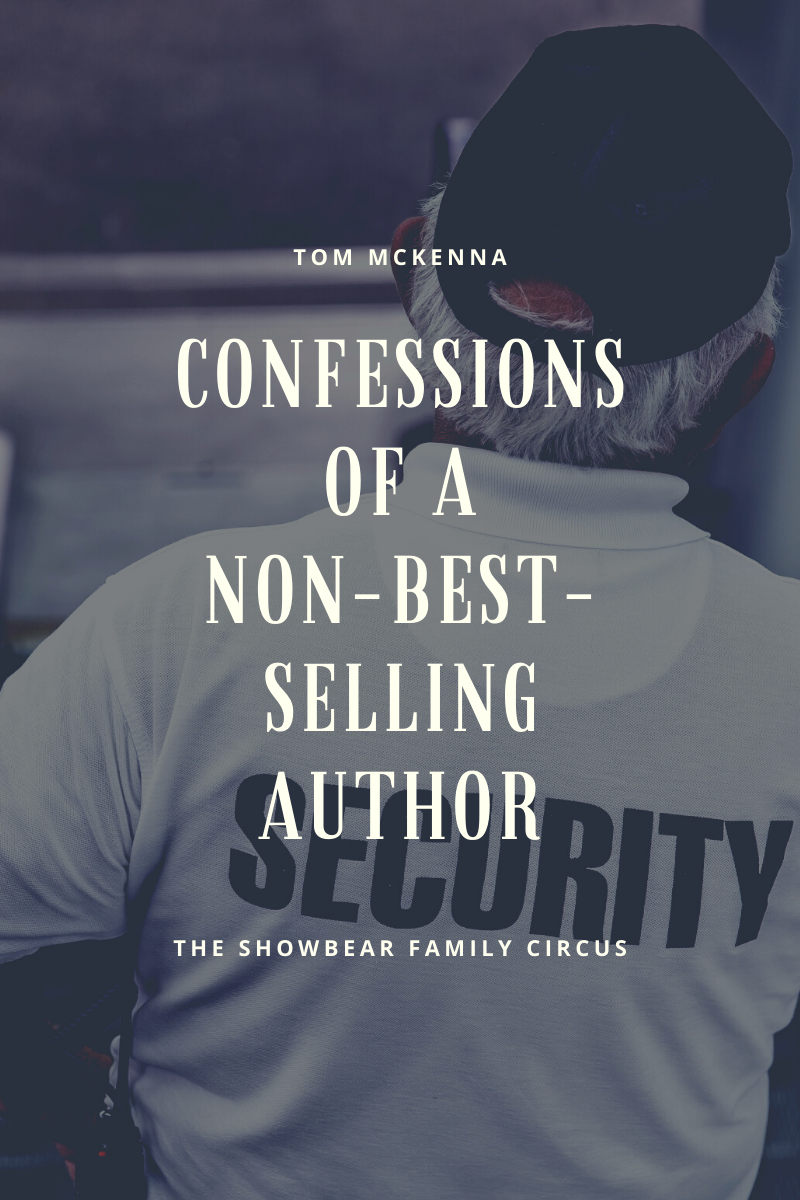
My overnight at the Convention Center started out about as uneventful as any other shift I had pulled over the past few weeks. I was already one month retired from the post office, in a funky college section of Boston called Allston, situated nearly dead center between Boston College and crosstown rival Boston University.
Allston is primarily made up of a multi-grain mix of people of every stripe, with a corresponding number of restaurants, thrift stores and head shops to satisfy every eclectic taste there.
The student population falls right in line with the number of absentee landlords who spend their hours ignoring their properties, while gouging the parents of students who dwell in the hovels dotting the roads between Brighton Ave. and Cambridge St.
I spent my first eleven years there humping mail to a largely invisible base of postal customers, due to class schedules and/or debilitating hangovers from all night keggers. I then morphed into a front line supervisor over the next seventeen years, recording junk mail volumes and generating reams of redundant reports for the man. Now sixty, I was ready to cut my workload in half.
With my twenty-eight years of federal service plus another twelve years performing non-essential work as a magnetic tape librarian for a large Boston bank, I was now officially semi-retired. I seamlessly took my forty years of career know-how and life experiences and parlayed it into a part-time gig pulling security at the Boston Convention Center. I’m not ashamed to mention that I blew away the three talking heads who made up the interview committee, although I thought their number was a tad excessive for a job that paid a lousy twelve bucks an hour.
About three weeks after my appointment to the BCC, I reconnected through social media with a boyhood friend named Bill L. whom I hadn’t had contact with in some thirty-odd years. We readily agreed to meet in Boston’s redeveloped Seaport District over calamari, fish tacos and three decades of catching up, washed down by pitchers of lager. Aside from another twenty or so pounds added to our frames and some grey hair, we looked pretty much as we did in the go-go eighties.
We weren’t together twenty minutes before we were picking up old verbal queues and finishing each other’s sentences, like we never missed a beat. Being a journalist, I knew Bill L. had worked for the Cape Cod Times before taking similar positions in and around Newport News Va. plus the newspapers serving the Finger Lakes region in N.Y. I also knew his timeline ran somewhere between the late seventies to the early eighties covering these rags before he decided to transition his skill set to N.Y.C.
Bill L. noshed on his taco, cleared his throat and started explaining how once in the city, he quickly segued from print media to television and never looked back. Once he got his foot in the door he began writing content for daytime talk shows for the likes of Ricki Lake and Geraldo Rivera. He also pitched in writing some of those corny double-entendres Robin Leach was so fond of using on his Lifestyles of the Rich and Famous program. Before long, he was producing segments for these shows, all the while absorbing every nuance and trick of the trade. He schooled himself in everything from audio prep and video editing, to green screens and post production. Armed with this knowledge and after kicking around the Big Apple for some dozen years, he decided to return home to Boston taking a television job at Channel 5, the largest market in New England.
Snagging the last taco while taking a long pull on his beer, Bill L. went on to note he had since left Channel 5. He got his degree in Television Production, teaches courses on the subject at Northeastern as a tenured professor, lectures at colleges in L.A. and Beijing, has his own animation studio and also co-hosts a weekly podcast for a hobby. Then he asked me what I’ve been up to.
I sheepishly replied that when I was previously employed supervising the efficient management of work hours vs. workloads for a bloated, near bankrupt bureaucracy, I could also be found coaching third base for my granddaughter’s 8th grade softball team.
We polished off another pitcher, paid our check and made plans to get together again before social security became insolvent.
The next night at four a.m. I was sitting in a 12 x 15 foot break-room, in a hall that had the capacity to hold six football fields. I was wearing a cheap, baggy, polyester security uniform, staring at my A&W beverage and a dried up bologna sandwich. Pissa! My dark mood turned more morose as I ruminated over the gargantuan contrasts between Bill L.’s career trajectory and mine. I realized it was a tough pill to swallow comparing two careers so diametrically opposite one another.
Lost in thought, I rewound a 16-millimeter visual of my life, trying to ferret out my most momentous decisions that had the greatest impact on my existence. I knew if I didn’t make a quick decision regarding my current state of mind, the only place I would ever find my self-respect would be at the bottom of a root beer bottle, wallowing in self-pity. I was finally taking a lifetime inventory of regrettable decisions and squared them against my lamentable reality. Where, I wondered, was my potential? Where had…my life gone?
After brainstorming thirty minutes of my lunch break away and taking the full measure of my talents, I came to one unanimous conclusion: I’d write a book. A humorous book! And why not? I like humor and I like words. It was a natural fit. Thinking back on the comedic chops my pop possessed, I recalled some of his more acerbic witticisms he would scribble on my paper lunch bags when I was still in high school. A few of his classics included: “Get a Haircut!” “Get a Job!” and my favorite, “Don’t Come Home!” which he probably got the most mileage out of.
Buoyed with a renewed sense of purpose and a steely determination to leave my mark, I wolfed down the rest of my sandwich and headed over to Hall B to activate escalators that would help usher in thousands of Pokémon zealots for the center’s largest Anime Convention later that morning. I suppose my preoccupation with an invigorating resolve to pen the next Runyonesque tome of short stories precluded me from noticing that I had mistakenly keyed all the escalators in the “up” position.
This miscue created a human logjam of epic proportions for the lanyard clad, animation fanatics, delaying the shows 9 a.m. opening by almost an hour. My “gross and willful negligence,” cited on my “Letter of Warning” per BCC management, would now blemish my Official Personal File in time memoriam.
Despite this setback I remained steadfast in my quest to write my first book. The fact that writing prolific humor wasn’t offered in the For Dummies series was my first obstacle. When I drilled down deeper about such an undertaking, my self-doubt kicked in, sucker punching my confidence in the face. Realistically, what did I know about themes, plotlines and protagonists? How would I weave symbolism into my tales or find my literary voice? I was starting to feel that following hot dog king Joey Chestnut into a public restroom on July 5th would have been an easier endeavor.
I then caught myself and vowed that I wouldn’t allow a self-defeating attitude to define me. Instead, for inspiration I concentrated on a myriad of favored authors over past generations. I was seeking mirth masters and wordsmiths of the first order. My heroes ran the gamut from Marx Brothers Svengali, S.J. Perelman to Seinfeld savant, Larry David and everyone in between. Yet I always came back to John Hughes. I recalled his epic tale “Vacation ’58” featured in a long lost copy of National Lampoon and googled it to reread this mini-masterpiece once again.
I gleaned two stylistic elements from this brilliant narrative: First was his wonderful progression of comical sequences that built from one scene to the next. Secondly: his ability to write as economically as possible. Mr. Hughes was the antithesis of the wordy and the surplus sentence. Now that I had an influential writing template, I focused my energies on a premise.
Since I had nothing in the way of a catchy beginning, a spellbinding middle or a compelling ending, I gave way to a convoluting logic that had me jotting down funny stories, half-truths and quirky anecdotes from my youth. After a month of scrawling these snippets into a notebook, I was satisfied that I had enough material to start. Aided by a MacBook Pro, I began stringing phrases together until they blossomed from paragraphs into pages till they numbered sixty-five. I estimated spending two to three hours on each page which allowed for multiple drafts, edits and revisions.
When I was done, I christened it Dance of the Deacon. Technically, it was a novella that captured a ten-year stretch in my life, covering everything from family vacations to young love to a flirtation with joining the priesthood. The accent was decidedly on absurdist humor.
In rapid succession I took to composing four more short stories. One was a dreamlike tale where three somewhat reluctant authors appear to me, tasked with tutoring me on the finer aspects of the arts and letters. My next short had me reminiscing about taking an office crush to a Rolling Stones concert that went south in no time flat. I then wrote a pocket piece of an imagined conversation that a father and son might conceivably have after a thirty-year absence.
Finally, I wrote a historical fiction story about a sports reporter covering the connection between Calvin Coolidge, pitcher Walter Johnson and the ’24 Washington Senators. The entire literary exercise clocked in at around one hundred pages.
I had my offing professionally proof read, corrected and edited by a publisher at no small cost. I did however balk at my editor’s full book package deal, which I found cost prohibitive. I read up on how to self-publish on Amazon with no up front costs and elected to run with their e-reader publishing program on Kindle.
Next on the agenda was finding a suitable title and pen name. Initially I considered Fifty Shades of Funny, but quickly figured readers might find it disingenuous where none of the stories contained any sex, let alone bondage scenes.
Focusing back on a title that conveyed humor and a sprinkle of surrealism, I settled on: Hey Mom, the Recliner Fell on Dad Again! It doesn’t exactly roll off the tongue but it was dubbed in the same vein as Tim Allen’s book: Don’t Stand Too Close to a Naked Man! Similar pretense. Turning to pseudonyms, I briefly toyed with using Tommy Higgins Clark as a moniker until my wife convinced me that such a name would likely generate an avalanche of “cease and desist” letters from the law offices of Simon and Schuster. I caved and went with my own handle.
When I read deeper into the Amazon Kindle program I found out that they were churning out one million titles per year. When I ran the math, I estimated with 330 million people in the country I was roughly 1 in 330. When I subtracted another 230 million from the ranks because they were either too young, too feeble or too disinclined to write, I found myself at about 1 in 100. Psychologically, the panache of being published was starting to erode a bit.
Despite these depressing numbers Amazon does allow authors to set their own prices and is willing to let writers keep up to seventy percent for every title downloaded. I priced my e-reader on Kindle for a measly $2.99, in the hopes that its puny price would attract a larger audience. After completing a three-page online questionnaire answering generic questions about the book, I pressed the submit button. Less than one day later, Hey Mom, the Recliner Fell on Dad Again! was available to my adoring public.
When the book flashed, I awarded myself the honor of being the first one to download it. Unfortunately, I had only quickly skimmed the contents before announcing to the Facebook world that I had indeed arrived as a published author. Feeling accomplished, a bit smug and ready to start watching the royalties roll in, I settled into my easy chair, grabbed my Kindle and nearly choked on my chicken loaf sandwich to realize my creation was chock full of errors, typos and mispunctuations. Talk about rookie mistakes.
I went back into my Amazon account, deleted my “live” book and contacted Word-to-Kindle. They’re a company that runs a program that formats Word Docx to an e-reader and corrects any errors (not to be confused with Shunn manuscript format), making one’s manuscript letter perfect. The only drawback was it took a month to get the sanitized version back. After going “live” again, I made another gross miscalculation assuming my 247 Facebook friends would translate into 247 purchases. Although they weren’t buying my product they were pretty generous with the number of likes and smiley faced emojis they were messaging me back with.
After a few months schilling on FB and all the groups I belonged to, my account only tallied thirty-five downloads, earning me the princely sum of seventy dollars. My next strategy was to get some word-of-mouth traction by giving my life’s stories away for free through Amazon ads. In the five days that the promotion ran, I garnered another seventy sales. (Actually, non-sales since it was free.)
I was starting to think that the chances of winning a Green Jacket at Augusta National would have been more likely than making another sale. Another minor setback hit me when I noticed that by keying in the first two words of my title on Amazon books, the default would go straight to comedian Louie Anderson’s book: Hey Mom, Stories For My Mother, But You Can Read Them Too! Jeez, this title was as bad as mine. To counter Louie Anderson’s blatant intrusion, I considered swapping out the “Hey Mom” part in my title for “Hey Grandma,” in the belief it would pop right alongside Paul McCartney’s children’s book, Hey Grandude! Sorry comedian Louie Anderson, but when it comes to book sales and cachet, I’m throwing my lot in with the ex-Beatle. Alas, too late, the die had been cast.
My next plan was entering my shorts into several reputable writing contests and let the book rise or fall on its own literary merits. After a year of reading rejection e-mails that were populating my inbox, I finally tasted a smidgen of success. My book placed as Finalist in the 2019 Faulkner-Wisdom Competition. Winners of the various categories would be flown to New Orleans, ensconced in a French Quarter hotel and then awarded their prize in an ancient Ursuline convent by the Faulkner Society.
I daydreamed of attending the ceremony, being feted and magnanimously submitting myself to the autograph and Q. and A. sessions with grace, wit and charm. I would then Uber back to my Bourbon St. hotel, tossing left over beads and trinkets from Mardi Gras to the minions in the street below before giving a final, limp wristed papal wave and retiring for the night. Then I woke up!
Placing as a Finalist was indeed the critical high-water mark for Hey Mom, the Recliner Fell on Dad Again! Although this Boomer still keeps finding that pesky copy and paste command vexing, it was still a project filled with self-discovery and satisfaction. How could it not be? With mentors like Bill L., John Hughes and even Louie Anderson pioneering the way for a security guard with a dream in his heart and a walkie-talkie in his pants, the good fight would continue to be fought, and one day God willing would be won.


Comment early, comment often, keep it civil: