Dean and Tammy Balu lived in their house starting in 1986 and for five to ten years, Dean took care of his own yard and cut his grass — the line between his yard and his neighbor’s yard, even though there was only four feet between that line and his driveway. Two extra laps of the lawn mower, about a twenty-five feet strip, and he refused to walk it. The neighbors were responsible for their yard, their property. God forbid he cross the border.
(Quick note: it’s Dean’s birthday today — make sure to wish him Happy Birthday in the comments and share this around to honor him. If you have a story about how Dean served you or those you love, be sure to let him and others know in the comments or when you share this interview).
He raked his own leaves and felt disgusted that people didn’t pick up their own leaves and let them blow around onto his yard. He felt like he had to rake the whole neighborhood every fall: that every leaf in his midcentury subdivision would end up on his doorstep.
“We had several forty to fifty year old trees we had to take care of, so we’re talking about literally forty, fifty bags full of leaves each season. I know we went to Mexico in ’01 so it had to be before ’01, so I’d say probably late 90’s sometime.” He read “love your neighbor as yourself” in the scriptures. “It hit me that my neighbors were not just foreign, not just overseas, not just people that I didn’t know, but that they were people out there that I did know, that were right next to me.”

Dean felt convicted not only to love these people he knew that lived beside him, he felt convicted that some reason might exist for them not to pick up their leaves or take care of their yard. “Here I was, a really healthy guy, and He caused me to remember: ten, fifteen years before I would have loved to have taken care of anybody’s yard in exchange for not living in an apartment and hear the people upstairs making noise and stuff. My ideal situation at that point was living in the basement of some elderly person’s house and taking care of their yard.”
“We’d get a list with the junior high kids of the elderly folks that were members of the church’s youth group and rake leaves. They appreciated it. We spent a little time doing it and I remember saying to the kids, ‘This isn’t rocket science: you can do this on your own, you can do it in your neighborhood. You don’t even have to find a list. Just walk down the street and man if there’s a bunch of leaves in somebody’s yard, there’s a reason why they’re not picking them up and you can do whatever it takes to meet that need.’” The church didn’t emphasize members doing it on their own, their agency. They manufactured it for the kids and therefore the kids waited until the next time an event was coordinated to serve. “It had to be this organized event and people had to organize it and pick a date and sign up and then put your t-shirt on and then go do this and come back and have pizza or whatever and have a little party for yourself because of this great thing you did. I remember around the same time that I first became aware that I should go past the boundary line in my yard and rake someone’s leaves.”
He remembers driving away from his home — driving away from his neighbors’s obvious needs — to do something in someone else’s yard several neighborhoods away. Why? To volunteer for the church event. Meanwhile, he could have been helping his neighbors. The contrast bloomed in his mind: I’m doing something great because I’m going to the church to do something organized — good things, but he remembers realizing that he didn’t need to sign up to do it, he didn’t need the t-shirt, the pizza party.
“About the same time, I was a deacon for awhile. I was getting pumped up by the position, thinking that I was doing good cause I was anointed as this great deacon and blah, blah, blah. I bailed on that because it was causing me to be too prideful and I started concentrating on stuff in my circle of influence in my neighborhood. I didn’t pull my kids into it, I didn’t force them to do it, and it’s not that they weren’t impacted by it, but it wasn’t like okay kids let’s go rake Martha’s yard. I strongly feel just watching it impacted them in different ways. They didn’t have to push a lawn mower to get the effect of it.”
Leading up to that in the nineties and for as long as Dean can remember, his wife Tammy taught their kids to “see a need and meet it.” A normal daily part of their existence concentrated on bringing meals to folks after a hospital stay or a baby. “That’s where I remember it starting out. Obviously it progressed.”

I should add that though I personally had the ideals of hosting the kind of radical meals like Jesus did out of the homes of his disciples — the sort of meals where everyone’s invited, no exceptions, even if you get called names by people in power or religious folk — I did not have the practices in place to make this happen prior to Dearborn (Arab hospitality), Chris DeWelt and Trish Udell (international ministry), and the Jews here in NYC. Tara, however, did. Her mom and Dad for years and years have let traveling missionary groups and interns and large meals come into their home and feel welcome in a radical way. They’ve done this at great personal cost, even risking safety and security, but having watched the lives of all of their kids I know without a shadow of a doubt that this radical hospitality netted a huge gain for all of them: each of them welcomes in the stranger, the foreigner, the refugee, the aimless wanderer. Even sometimes the criminal, the addict, the enemy. It’s an honor to see such practice in their lives, to have married into a family of folk who try their best to hold out a welcoming hand to the weird, the unwelcome, those in need. I can’t speak for the others, but I can say that I would not be near as welcoming with my place and my stuff and my paycheck as I am now without seeing examples like theirs, even mindful of the great personal toll it has taken on them. Many, many of us remain indebted for their example of hospitality.
In college at Purdue, both of them got involved in a service fraternity — Alpha Phi Omega. They didn’t know each other at the time. Alpha Phi Omega based their praxis on Boy Scout principles: community, campus, and “I don’t know what the other two c’s were. Coed. No house. They had a meeting room, but they did things on the campus. We visited nursing homes, did blood drives. So I remember that drawing me the desire to some extracurricular activity to fill the void. That was really probably around the same time I became a Christian, I don’t remember which came first per se. Seeds were planted at that point to have the desire to help others, but very baby steps at that time.”
“The other neighbors in my close proximity… I guess it was cutting grass. I didn’t cut that line. It was, you know, if I’m out there in my front yard — my front yard’s not that big — why not cut both neighbors’s yards in one pass? I mean we’re talking minutes difference. And I noticed my neighbor who was a single mom raising two kids, they had already left home, but her son lived out in St. Charles and he would come back and cut grass. I remember observing that and just deciding, ‘Well I’ll just cut her grass without even asking.’”
So he did. And she’s the kind of person that doesn’t really notice a whole lot. “Which was fine,” he said. “I wasn’t looking for any accolades. At some point she noticed and asked me to do that and I’ve done it ever since, probably for seventeen or eighteen years now I’ve probably cut her grass. I vividly remember in ’01 we committed to go to Mexico on a missions trip as a whole family. I’d said ‘no’ to God for ten years to go visit friends who were house parents at an orphanage thinking there was no way I could afford it. Finally God spoke to me and said, ‘You’re the one saying no. I’m not. Step out and commit and let me take care of it.’
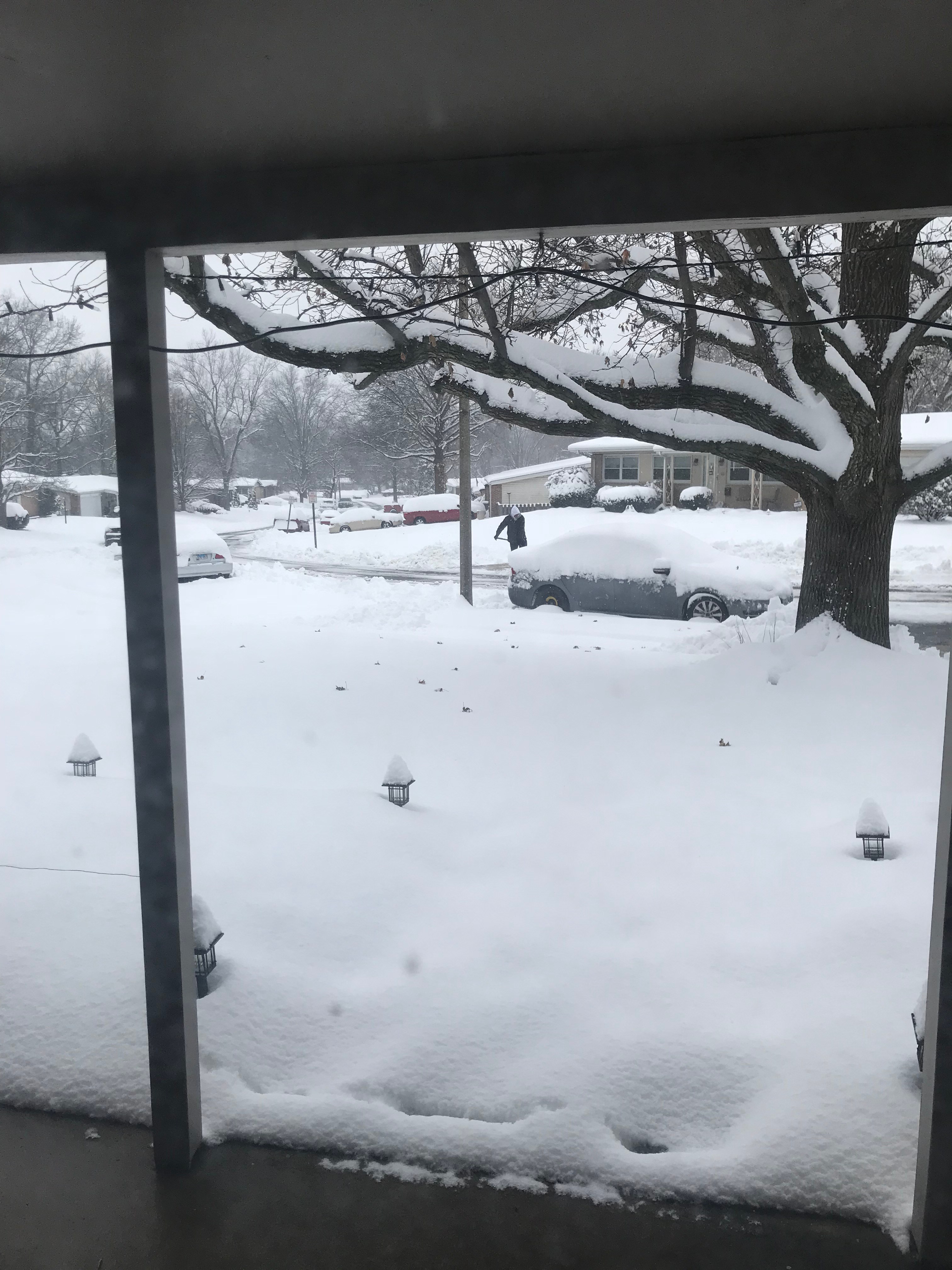
Days from that, another neighbor, a widow whom Dean used see out in the yard with her husband while taking Tara and the girls on walks down the street, came knocking on the door and said to Tammy, “Hey I saw Dean out cutting Carol’s grass and I’m wondering if he’s interested in cutting my grass?”
He knew the husband had passed away. He remembered thinking, “Oh I need to go talk to Martha. I need to check on her.” Good thought, hadn’t acted on it. She’d had a neighbor’s grandson do it. He couldn’t anymore. “So I went down to see her and was shocked it had been two years since her husband had passed away and I hadn’t really done anything. She was five doors down.” He came down: she had a lawn mower, had the gas, had a certain way she wanted things done, and I said, “Sure.”
And she said, “What are you gonna charge me?”
And I said, “Martha you don’t have to pay me anything.”
Of course she wouldn’t stand for that.
“So I agreed to whatever she was paying the grandsons across the street. I can’t remember if it was twenty bucks per time and I thought, ‘Okay, God, here we go.’ That summer we went to Mexico in early September and that lawn mowing money paid for one of the plane tickets for one of my kids. That lawn progressed to cutting a couple of other neighbors’s yards, moving further away from my property and looking out for more lawns.” Some free, some paid. He recognized right away that it was much more than cutting grass. It progressed to be more time and more of an effort. “Never a burden, but I made sure quickly that I wouldn’t… let’s say if it took thirty-five minutes to cut Martha’s grass, I wouldn’t go down there to do it if I knew I had a forty-five minute window and I had some other commitment, cause the opportunity… for her to need something else done or just to talk was just as important as cutting her grass. That progressed to where I trimmed her hedges. She would call me to change the lightbulb in the garage. She was smart enough to know not to do things on her own. We got a relationship real quick to where she was comfortable asking me to do other things for her. She kept a little list by her telephone. Nothing major — no big carpentry or structural things — but just those small things her deceased husband would have taken care of.”
He cut her grass for ten or twelve years before she got to the point where she couldn’t live alone and then moved to her daughters in Columbia, Missouri.
In the fall, when they’d rake leaves, he’d see another neighbor Virginia next door — a guy with ten feet separating his house’s outer wall from Dean’s. “We’d talk in the summer or fall casually a few minutes at a time. At times weeks would go by and we wouldn’t talk. In the winter, months would go by where Eliot and I wouldn’t see each other, but Virginia was an elderly woman. When we raked leaves together, Virginia’s house had leaves as well, so we started picking those leaves up together.”
She’d appreciate it. Sometimes she saw it, sometimes she didn’t, sometimes she left the yard wastebags for them. He didn’t take any money from her or anything, but she felt so grateful.
“I remember it had been months through the winter that we really didn’t see each other and I pulled up in the front yard and he pulled up in his driveway not twenty feet from my driveway, his wife was driving and he was in the passenger side, and he was frail and looked like he was almost on his deathbed and I remember being in shock cause I hadn’t seen him in months. And that really took me to another level of going, ‘Wow, I thought I knew my neighbors.’ But that stark, significant occurrence — I hadn’t seen Eliot in months and didn’t know anything that was going on with Eliot. So we talked pretty quick after that and come to find out he had a rare liver disease that put him on a transplant list and he quickly within two weeks of being on the list had a donor. I can’t remember if that was because of how severe his condition was or if the match just came up or whatever, but he was coming home from the hospital with his new liver and that was another step in a deeper level. Obviously he couldn’t cut the grass anymore so I cut the grass.”
Eliot got better and they had a new level of depth in their conversations: grew up in East St. Louis, got a second chance on life and was gonna go invest in the youth over in East St. Louis, develop some discipleship materials for young boys, took that and really ran with it. He was doing real good, but probably in six months or nine months, he caught pneumonia and passed away pretty suddenly. “I remember his health had declined for awhile. I remember coming home to Tamm and saying, ‘We need to make that meal for the Lockett’s.’ This is my next door neighbor of fifteen years.”
Eliot was not doing well. Dean got a call from Tammy one day: Eliot’s daughter came over to the house. “Eliot has passed away,” she said.
Dean and Tammy had said for a week or more, “We’re gonna do, we’re gonna go over, we’re gonna make a meal for them.” He pounded his fist on the picnic table where we sat. “We never did it and missed out on that opportunity. And now, late that morning I remember sitting at my desk and he had passed in his bed, in his house. That right there was a decision point for me to go, ‘I messed up, I missed out. What do I do now? Do I wait and go to the visitation or do I come home?’ God said, ‘Go home.’ So I did. I went over. I knocked on the door and his son greeted me at the door, tall dude, could snap me with one hand. We never had a relationship while he was growing up next door. He had a daughter out of wedlock — that Bethany would play with when she was young — he let us do that. Never really any conversation for several years, but I remember him greeting me at the door and I said whatever you say. He asked me if I wanted to come in and see him. That wasn’t my intent, but I did, I came in.”
He shared how significant Dean was. Dean can’t remember exactly what his exact words, but he shared how highly his dad thought of me, how much he appreciated me. “I remember being taken back by that: what little I had done and thinking why would he even think of that? But, sad to say, fifteen years living next door and I was in his house for the first time when he was in the front room, dead. So… what transpired from those next couple days was truly amazing because his wife was there, his wife’s sister was there — she had two sisters and they were already in town. We ended up that evening coming back over and sitting in the living room with them and just sharing things with them, just being there.”

It lasted several hours. Dean remembers the visitation was a couple of days later. Eliot’s service visitation was in East St. Louis, but he worked at Boeing so there was another visitation for “all those people that didn’t want to go to East St. Louis over on this side of the river. I remember thinking, ‘Wow. How crazy is that?’” It didn’t surprise him, but he still didn’t understand it. “So we went to the Boeing side visitation more for a timing aspect and brought our kids with us and were pretty late. Almost everybody had gone. But we greeted the family and you would have thought… you would have thought we’d hung out in each other’s homes for all of those fifteen years — cause of the time we had spent just in that moment a couple of days before. We might have been there more than just that one night. That… that was amazing.”
Tammy was going out of town for family or a conference, but Dean made the decision to take time off, go from work, and drive over to East St. Louis for the funeral and go back to work. Tara and Lauren had some sort of commitment, but he told his two younger kids Bethany and Micah that this would happen. They knew Eliot. One of them asked if they could go to the funeral. “I didn’t even ask them, but they asked me. And I was like, ‘I don’t have any reason why you can’t. So yes. I asked the other one and they both wanted to go.’ I told them be ready at this time, I’m gonna come and we’ll go. Micah’s probably six or seven, Bethany was eight or nine. We took off and I remember intentionally driving downtown and driving straight to East St. Louis. I don’t know where the thought came from, but I wanted both of them to see how close they were (to downtown St. Louis) and how different it was going to be. We went downtown as if we were going to do whatever we would normally do — ballgame, see the arch.” He pointed out everything they normally saw and within five minutes from downtown they pulled up in this big old church and the abandoned buildings and vacant lots and closed down storefronts around from years of systemic injustice through redlining, favoritism in lending, eminent domain, the practice of making mortgages tax deductible in places where monthly payments cost a forth of monthly rent so that tenants get impoverished and landlords grow rich.
“A ton of cars and people filled the church parking lot. We walked up and we were the only white people anywhere around. Which didn’t surprise me, cause that’s how it was even at the visitation. All the Boeing people had come right from work. I think the Boeing visitation was… whatever… four to eight and we showed up at seven forty five, cause it was still in North St. Louis. So we went into the church, big old church, main aisle, down the center, big wooden pews probably forty or fifty rows of them. I remember walking up and walking up and fortunately stopped ten or twelve rows from the front not knowing how much family was gonna be there and we sat right on the aisle. Me, Bethany, and Micah. Two blonde haired white kids and me, sitting down. And somebody came up and talked to us, but we weren’t there super early. People came to sit down and there was this big procession of family coming. I remember waiting and Micah was on the end of the pew on the aisle, he was standing up looking around. If anyone hadn’t seen us come in before, everybody there saw us then. And I can’t remember if Bethany or Micah said something about, ‘Are we the only white people here?’ And I looked around and said, ‘Yeah, bud, I think so.’”
At the time the church they attended hadn’t become much of a mosaic yet.
I remember saying to him, “Now do you get an idea of what it feels like for someone to visit our church that might be black? And how they feel?”
Micah sat and thought.
Dean had been to some black funerals and had a black friend teach him how the bodies appear to decay slower due to pigment, so they tend to have more time to prepare for funerals. It allows for more family, more significant folks to make the trek, more ministers to come to the service. And the family and the procession filled up eight or ten rows. Dean thought, “We’re sitting too close. We’re gonna be in the way of all of this family on the right side.” Fortunately, they had two rows between them and the ten rows of family “all decked out, obviously.”
Eliot’s mom and two kids were at the end of that procession. Eliot’s son Kenny, same guy who’d praised Dean a week prior, walked up “all decked out” and Micah sat up on his knees in the pew so that he could see. Kenny walked by him and put his hand on his shoulder just as he walked by. “Which was just sooooo surreal to think that he would do that as a gesture of appreciation when there was no communication with him for years and years and years up until that one week where I went over. I turned to Micah and said, ‘You realize what he did there? Why he did that?’ And Micah didn’t understand. I said, ‘He couldn’t stop and talk, but he was just telling you, Thanks for being here.’ I don’t know if I’ve talked to Bethany and Micah about a lot of it now that they’re adults to see if they remember, but it was a significant event there.”
After that, Dean got “intentional” with Eliot’s wife Pearly. “I was there all the time: anything you need. If I don’t know how, I’ll find out somebody that can help you. She had Eliot’s riding lawn mower to cut it even though the yard wasn’t super big and I found somebody to buy the lawn mower. Any time she had an issue, I helped as much as I could. She stayed for a couple years — her sisters wanted her to move to either Atlanta or Las Vegas where they lived. The memories were just too hard to be there by herself, to go to the same places where they’d been together. So she relocated.”
That leads directly into the next chapter.
“We prayed as a family: okay, the next family that comes, we’re not gonna wait fifteen years. We’re gonna pray for whoever comes that we’d be neighbors from the start. That we wouldn’t miss the opportunity, do the shoulda-coulda-woulda, do it halfway. We’d be all in on what we did.”
And that’s when Mr. Steins showed up.
“Thanksgiving weekend, we’re sitting… I think we’re sitting at Thanksgiving dinner [Uncle] Mike and [Aunt] Kim were there and this moving truck pulls up, this eccentric guy with a pipe and hat and cane unloads all this stuff. Within a few days we’re talking to him and come to find out he has sixty moving boxes full of books. Helped him set up I don’t know how many shelves in the basement. Tara unpacks I don’t know how many books. Lauren helped with bringing food over. Bethany and Micah are small and getting quizzed by Joe Steins, who’s this college professor and constitutional law wiz, eccentric guy who has all kinds of historical caricatures and pictures he hangs on the wall. We had just been to the East Coast — Tara was in junior high — and Mr. Steins asked Micah, ‘Who’s that picture there on the wall?’ And Micah knows it’s Thomas Jefferson and Joe’s just flabbergasted. Says some of his college students don’t even know that. And so that started the process of being a neighbor that progressed for years and years.”
I often describe Mr. Steins as a real-life Bilbo Baggins. The kind of guy that retires out on the edge of town with lots of odd dragon and dwarven treasure stockpiled in his basement, who buys out the houses on either side of him so that he can curate his neighbors, who reads every volume in his personal sets of Harvard, Britannica, and Loeb classics and hand oils all their leather covers to keep them fresh and readable — at least the ones that can be oiled. More handcarved chess sets than the eye can see and a back yard like a Vatican courtyard, complete with a small creek, moss, and statuary.
“We could talk about him for weeks,” Dean said. “But one of the things I remember — and not that I was trying to keep track or keep score or wanting to do more than spending time with Eliot and Pearly, being all-in — but there were times where he would flag me over and Tamm wouldn’t know where I was. She’d see my truck parked across the street in Carol’s driveway and she didn’t know where I was. The most significant thing was that, however deep or however much time whenever I thought wow, I’m at a level where I really should be, he’s calling me because he’s lonely, he’s calling me because he needs medicine picked up or help in his backyard, God would provide a scenario to where it was like, You’d thought you touched the surface with Eliot and Pearly, but you’re still only touching the surface of what it’s really supposed to be. Reminded me to not get cocky, proud about how much time. Obviously I had to manage it and set up the right communication, right signals to where I could come home for dinner and know when to go and not to go. But sometimes there was many hours. If Joe called me over at nine o’clock over, I wasn’t gonna be home at nine-thirty, you know.
“He called me one time when I was in Singapore for work. Thirteen hours difference. The phone rang at about four in the morning and I picked it up and told him where I was, what time it was, and it didn’t register with him or whatever. He wanted to talk. There wasn’t anything significant that clicked about that. As far as he was concerned, I was right next door and just couldn’t come over right now. And I couldn’t get him off the phone for an hour. I think Boeing paid for a pricy cellphone bill that month. I never got chastized for it, but by the time I got off the phone, I was suppose to be back up in an hour and I didn’t get back to sleep.”
After that, Dean tried to communicate more when he was going out of town so that Mr. Steins understood. Mr. Steins went back and forth — he wouldn’t rely on Dean all the time, it was “this hot and cold thing. He’d ask his aunt to go pick up stuff and she’d charge him cab fare for mileage and her time just like it was a cabby. A family member. Sometimes he’d order groceries for delivery and have to pay the delivery charge even though I was driving by the same grocery store every day.”
They went back and forth and Dean kept pushing to make himself more and more available but Mr. Steins struggled because he didn’t understand the fullness of Dean’s willingness. Or maybe he couldn’t wait two hours. Sometimes Dean would go over and he’d be hungry because there was no food in his house. Mr. Steins had moved from Jennings to Florissant because he was taking care of his ninety-year-old mother who had dementia early on while he was still a young professor. The man never married, had no kids, parents dead, and paid for a nurse during the day so he could sleep. He’d take the bus and then at night the nurse would go home by five or six and take care of her. Tammy would go over there in her shorts and Momma Steins would start talking about “her bloomers”. He never put a diaper on her. If she soiled the bed, he’d get up, bathe her, change the linens, do the laundry, put her back to bed. He did that I don’t know how many years before he moved to Florissant. A significant number of years before she passed away. I was a pall bearer her at her funeral — I had known him two years or less and had become one of his most significant friends.”
He would sit outside with her on the back porch. One tree in the back corner of Dean’s yard between his and the neighbor directly behind him had an old cedar tree that overhang the back fence. Mr. Steins grew concerned about the poison ivy back there, so he paid to have the whole thing taken out because he worried about poison ivy blowing on his mother.
This kind of deep commitment to one another carried on. Mr. Steins’s mother died and he blamed himself for being absent from the hospital because he thought he could have offered the doctors more information that would have helped his mother heal. He loved his mom. And Dean had told him numerous times that he honored his father and mother in the way he took care of her. He still felt haunted by shoulda and coulda. He drank. Dean never bought him any alcohol. “You could tell when he was doing good cause he was out walking with his cane or messing around in his backyard. When he was bad, you’d never see him.”
He started isolating.
“He called me and I could tell by his demeanor that he’d be drinking. In bad times he drank probably a liter of brandy a day, no problem.” Dean took the trash out from one week to the next and remembers multiple bottles. He cared for Mr. Steins in those harder times.
“I remember one time when Tara and Lauren were both in college. Tara was a junior. I was raking leaves in my front yard a couple months into the semester. First time I had two college tuition payments to concern myself with and painting on the side, doing jobs, figuring out how to pay the bill. I remember just raking my leaves on a fall evening when it was still light. He came walking over — it wasn’t something he did very often, but he came over and everyone was either gone or downstairs and he was quick to ask me a question. Wasn’t a lot of small talk or whatever. He asked me, ‘What keeps you up at night?’ Now looking back on it, I can recognize that correlation between him having these reservations between his mom and what haunted him, but I remember him asking me while I’m out there raking and worrying about how I’m gonna pay this monthly tuition fee for two kids. I handled the first one, but how am I gonna handle two now? And I said, ‘You know Joe, honestly, what keeps me up is I got two kids in college now and I feel really strongly that I’m responsible for paying for their college expense. My parents paid for mine — I didn’t have any student loans starting out on my career. We had had many conversations about what my kids were doing ministry-wise and I didn’t want to put that burden on them. We didn’t have a lot of discussion after that. I don’t know that we had any conversation after that.”
He left. He walked back to his house.
Dean kept raking.
Ten minutes later, Mr. Steins walked back over and handed Dean a check.
“I don’t even know if he said anything or not. He turned around and walked back to his house. He might have said, ‘Here: use this to help with college stuff.’ The check was five thousand dollars. I was just flabbergasted. Not that I didn’t think and see and understand how God was working in some pretty crazy ways in teaching me to love your neighbor and the depth of that and getting into somebody’s dirty laundry, the details, to be able to see those needs and anticipate those needs even before they happen and not just wait. Not just be like, ‘Call me anytime you need anything,’ and sit fat, dumb, happy, and comfortable. I made myself available, they just didn’t ask, so they may not need me for anything. If you knew Joe, he wasn’t sold on what my kids were doing in college. He didn’t understand Tara smuggling bibles in Northern Africa.”
Joe wanted to know why Dean would let his girls go into a dangerous place and do something like that. He didn’t want to support that. But he differentiated that from Dean being honest and providing that need.
When the turmoil came for their youth ministers, Titus and Chris, they’d resigned and relocated to other ministries out of the area, there was a different level of cutting their grass so that they didn’t have to worry about that. They had enough to worry about, raising young kids, the real estate market was terrible then, the church had created a policy where they gave them an interest-free loan of ten thousand dollars to buy a house but there was some stipulation that they had to pay it back if they ever left. So not only did they need to sell their house, they’d lose money by paying this loan back. So Dean remembered offering to take care of the grass.
“It was significant in a different way because it was still cutting grass for people that weren’t even around. Took that to a different level because of the relationship we had with them. It required more effort — I couldn’t push my lawn mower to their house. Had to load it up in my truck with makeshift ramps, unload it, figured out their clippings. They didn’t have garbage pickup — they didn’t live there anymore. I worked basically as a property manager for them. For a season, I cut eight or nine lawns and only got paid for two. I enjoyed it, but it was a significant amount of time. Wasn’t like I came home and cut eight lawns in one evening, but it was a significant commitment to where, you know, there was other things that took a lesser significance or didn’t allow me to do things.”
Curious, I asked: did it affected any life decisions they might have made otherwise had they not known and loved their neighbors?
“When we first moved to our house, we saved up… we had a couple of apartments just shy of four years. I remember thinking when we bought the house that even the realtor would say, ‘Five to seven years, you’ll move up to a bigger house.’ They were good, had all the resources and referrals cause they not only wanted to sell you a house that you enjoyed, they were hoping to list it and sell it to somebody else and sell you a different house. I remember Tamm and I talking: there’s no reason for us to move to a different house cause we liked the location and we could put a bedroom in the basement, finish off the basement for more living space. Even still it was four bedrooms with with four kids counting our bedroom, so not everyone had a bedroom. So we kinda decided to stay, but through that process, a lot of people were leaving North County. White flighting. The neighborhood was starting to change and property values were going down and people were getting out so they wouldn’t lose money on their house and they could upset. Not that I had a desire to do that and this caused me to stay, but it was a logical progression or reinforcement in, Hey, God, you put us here for a reason and we’re not gonna move until you say move. We’re not gonna take a step until you tell us to make that move, make that transition. Everything pointed to staying, dig deeper, put roots down. And the whole other thing: Tammy’s upbringing. Her dad was a mover and a shaker, moving them multiple times, once significantly for the next promotion, next big job, and I remember… I don’t even know if we talked about it that many times. I only moved once before starting in junior high and it wasn’t super traumatic, but I remember thinking, ‘I’m not gonna move my kids even though we were homeschooling and there’s no issue with school or education deterioration or anything. We could get up and move anywhere, whatever house we wanted to, and we didn’t care if the school system was better or worse because we were gonna homeschool.’ But everything solidified: we should stay.”
Mr. Steins moved to the neighborhood in Florissant because in Jennings, his neighborhood value dropped and the guy next door to him started storing junk that he didn’t like to look at — the rules and requirements on yards didn’t even match up to Florissant’s level. Mr. Steins worried about this happening. “We would have conversations and he was wanting to buy other houses on the street that came up for sale and he wants me to go in on them with him. And I’d say, ‘Joe, I’m not in a position to buy any houses, you know. I don’t have any money to do that.’”
Nevertheless, Joe kept bringing it up.
Then the house right next door to him, the original owner passed away and he wanted to buy that house. He asked Dean to go in and he gave the same answer, but he was and he did. He paid cash for that house. “I painted the whole thing for him, he found a renter, he owned two.” And after that, there were even houses down the street that he would talk about buying, asking Dean to go in and Dean never felt like he was in any position — nor did Dean dream of — leveraging the equity in his house to do that kind of venture. That wasn’t sane to do in his book. His whole goal was to pay off his house, whether he’d make money or whatever. It felt totally foreign to him.
“He had tenants. I didn’t manage the property or do much for him. He got all kinds of things done on the house, but he went through multiple tenants. First lady, Margaret, real nice African American lady. Single. Decent paying job in the medical industry. I would help her out and do things and she was getting driven crazy by him. Joe’s over there asking her stuff and just being… nothing bad per say, just his eccentric stuff and she’d talk about how he’s driving her crazy and she ended up only staying a year and moving out. It progressed to a succession to a series of really poor choices of tenants. Going through several of them. Through that process he was on the roller coaster with his mom passing away, he was very upset with his family members — second cousins and such — because they were never around for the care of his mom. Once she passed away, they started flocking in. Joe, what are you gonna do with this? What are you gonna do with grandma’s antiques? I want that. He was angry about it. We had many conversations about that, but they were never around. He didn’t want them to have anything. He wanted me to come over and make lists of who should get things. He talked about my kids once they graduated — would they come back into the area and need a house? And maybe he should just give him a house or which house would I want for my kids? And sometimes he’d been drinking, sometimes he hadn’t. He even asked a few times to take him to his lawyer and change his will. It was one of only two things I wouldn’t do for him (the other was buying him alcohol)… I told him I’d take pictures if he wanted to do stuff, but he never acted. He asked me a dozen time to go to his lawyer down in Clayton to change his will and take his family members out of them.”

Dean did not want to be put in a situation where he was driving downtown to change his will. He didn’t want to be a beneficiary: that looked really shoddy, especially with Mr. Steins’s drinking.
“It wasn’t a single occurrence. It happened for years. I never even mentioned it to Tammy, but I remember thinking sometimes that it would be really crazy if Joe would give me something. I haven’t known him that many years and he doesn’t have much family. And there was one time he even asked for our social security numbers. I must have given it to him. Crazy to think about now.”
When Dean’s neighbor, Professor Joe Steins, passed away, Dean was a pall bearer again at his funeral with some of his family members. He had lunch with his family members and real good friends that he’d met and seen and would come over for twenty-plus years. Pretty good time talking about Joe.
A week or two later, Mr. Steins’s lawyer showed up as executor of the estate. Tammy and Dean got a copy of his will. They were beneficiaries for Virginia’s house.
“That was crazy to think about that. To tie it all the way back to that first lawn I decided to rake. That God would put something like that in our laps when it wasn’t our intent or desire to do, but provided the rental income to put Bethany and Micah through school. I didn’t have the worries. I didn’t stay up at night worrying about tuition when they started school. That’s a little more significant than one five-thousand dollar check. Here Joe was, even in death, covering me again. It’s a thousand piece jigsaw puzzle you put together: it goes back to Eliot, Martha’s grass, the service fraternity. This house had no debt. Upgraded windows, upgraded furnace, air conditioner, new electrical box, new roof. No expenses that I needed to pay for and all that started with making just two more passes on my neighbor’s yard, crossing the boundary to get to their driveway. We’re not talking twenty-five feet.”
But it’s the borders we cross for the sake of our neighbor that make all the difference. Chesterton said that “the Bible tells us to love our neighbors and love our enemies, probably because they are generally the same people.” The ex-wife is the neighbor in marriage. The ex-business partner is the neighbor in a joint venture. The ex-best-friend is a neighbor on the journey. The ex-ally is the geopolitical neighbor. Who lives on the other side of the world that most needs your love? Who lives on the other side of the ocean? The other side of the river? The country? The state? Who lives on the other side of the tracks? The other side of the hood or apartment complex? Sometimes it’s twenty-five feet of grass, sometimes it’s a river, sometimes it’s an ocean.
Crossing that property line, though, and doing for them what you need done for yourself?
That the first step to jubilee.

(Happy birthday from the Schauberts, dad. We love and respect you and have complete confidence in whatever you choose to do next).


Comment early, comment often, keep it civil: