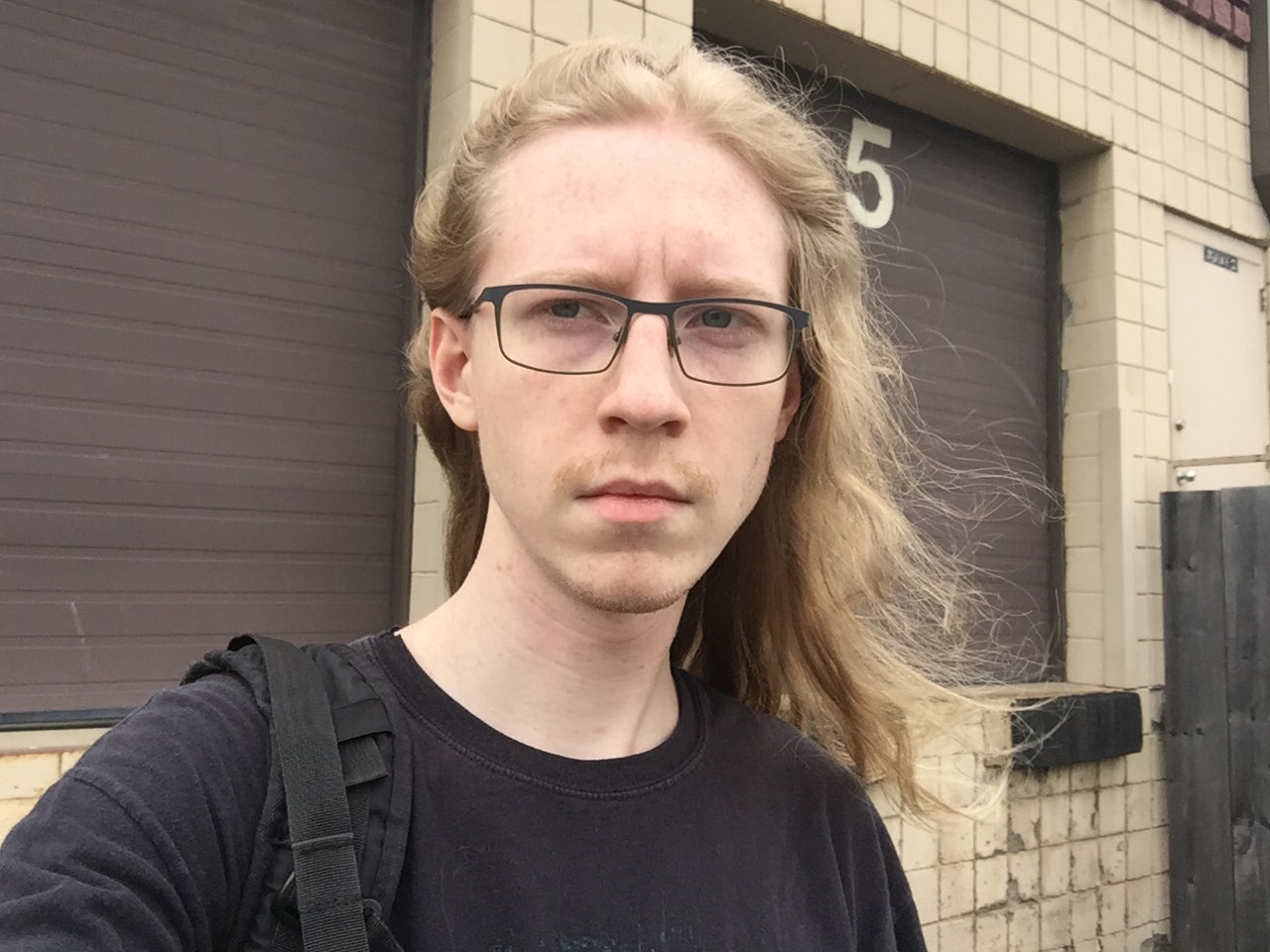

Lancelot Schaubert — Thanks for joining us, Gabriel Kellman. How’d you get into speculative fiction?
Gabriel Kellman — Well, I was a vividly imaginative kid, so I spent a large chunk of my childhood with my brain in other universes. I also read a lot as a kid, and most of it was fantasy or sci-fi, so I’m sure that informed my upbringing in terms of wanting to create and write. My childhood creativity had to find an outlet, so I wrote some shorter fiction and made board and card games. I only really started writing with the intent of publishing it in college, where I also got more serious about game design. So long story short, I don’t know exactly why, or exactly when, I got into writing speculative fiction. I’ve been creating other worlds for as long as I can remember.
Lancelot Schaubert — Which universes?
Gabriel Kellman — Oh, all sorts. They were all fantastical of course. Why imagine the real world when you could imagine one with magic, aliens, or something of the like? High fantasy was always my go-to, though other genres snuck in there occasionally. As a kid my mother would read us the hobbit every holiday season, along with other fantasy novels, so that no doubt influenced my love of medieval fantasy. The most consistent universe though, was one I called “The Adventure” (it turns out I’ve always been bad at titles). The Adventure was a story game I played with my younger sibling, where I would paint a picture of what was happening, and they would tell me what their character — a werewolf space adventurer — would do. It was like a TTRPG but without the dice. Looking back on this childhood story game it still intrigues me even though it’s not anything publishable, mainly because it was wildly inventive and never stuck to a single genre. Whatever I was interested in at the time snuck in there, so while there was magic, wizards, and dragons, there were also aliens, spaceships, and laser guns. I feel like the child-like disregard for any “rules” of fiction or genre made that universe really weird and interesting. It also kind of acts as a time capsule for me today, with any given chapter of the story reflecting what I was interested in at the time.
Lancelot Schaubert — Any examples from the time capsule?
Gabriel Kellman — It’s all insane, but yeah, you can pick out some eras. A lot of it takes heavy inspiration from media I liked at the time. For example, there’s a whole arc about robotic aliens that disintegrate people with the light contained within their jack-o-lantern-like heads that mixes my obsession with Oz books that I had at the time and some motifs from Dr Who I had picked up while visiting the grandparents. Mostly though, new story arcs, characters, and genres got mixed in as I discovered them. I didn’t know it at the time, but I was essentially doing a long creative exercise as a kid, which I’m sure helped to develop my creativity.
Lancelot Schaubert — Um. I’m telling you right now if you can find an illustrator I would totally host this non sequitur fever dream
Gabriel Kellman — I did write a bunch of it down at some point to remember it better, maybe I’ll try to turn it into a story of some kind.
Lancelot Schaubert How many games have you made do you think? Have you done that professionally?
Gabriel Kellman — In terms of board and card games I made too many to count as a kid. Though a lot of them were just taking pieces from other board games around me and making rules to make all of the disparate chunks of other games work together. Then as I got older, I learned how to make games through trial and error, just creating games again and again until I found what worked and what didn’t. I didn’t really make games with the intent of publishing them until college, when I won a grant to work on a TTRPG game for a summer. Over that summer I was paid to make Into Dreamland, a TTRPG game set in a world of dreams akin to Alice in wonderland, or on the darker side something like Coraline. I’ve been working on it over the four years since, and I’m hoping to unveil it to the public soon. Probably though a Kickstarter or something of the like, as that seems to be how modern independently published games are made these days, but we’ll see.
Lancelot Schaubert — That sounds wonderful to me. Let us know when it’s out and I’ll update this interview to include it.
Gabriel Kellman — I’ll send you a link once I put it online, its finishing a round of playtesting right now.
Lancelot Schaubert — How are play tests going? What’s that experience been like for you?
Gabriel Kellman — Playtesting’s an interesting experience, you always find something to fix that feels obvious, but you just never saw. It’s a good way to shake off tunnel vision. It’s fun though, seeing other people populate a world you made with their own stories is just a really unique experience. I find I love writing fiction and games for very different reasons, and to different ends. Writing fiction allows me to craft and edit a complete story, with everything about it in my control. A game however, feels closer to building a playground and then watching people run around in it in chaotic unforeseen ways. It’s a process of creation that feels like laying the groundwork for someone else to build upon as opposed to making a whole building for another person to inhabit for a time.
LS — TTRPG though is about a sandbox as it gets right?(edited)
GK — Yeah, It’s just a system to play in. The actual story is dependent on the group playing it.
LS — Tell me about your stories. What gets you up and writing in the morning?
GK — Well, I imagine so many weird things that some of them inevitably congeal into workable stories. Characters, plot points, and other aspects of stories usually come to me in daydreams, already almost fully formed. Ironically, Visions of a Single Eye, the short story I wrote for Gods and Globes 3, was one of the only stories that came from research instead of daydreams. The restriction to mythological figures made me poke around in the old Norse Edda’s for inspiration that I could extrapolate and build from. So that was a cool experience. In terms of why I write, I just need to get the stories out of me before I explode sometimes. I will say though, actually sitting down and writing a story is harder than imagining it, unfortunately.

LS — What did you find in your research?
GK — So I’ve been fascinated by Norse mythology for a while, and when I was skimming through stories in the Poetic Edda I found one called Völuspá, which detailed Odin consulting a seer to see the beginning of creation and foresee the end of the world. That story struck me as one that could serve as the basis for a really powerful story about the horror inherent in foresight.
Watching the end of the world and the death of your family on one fell swoop sounds rough after all. You don’t really get a sense that Odin feels a great deal of emotion one way or another from the Völuspá itself, so when I was writing, while the poem served as a roadmap of plot points to get to, the emotional side of the story was something I had to come up with, along with the dialogue and specific character interactions. It was really interesting to work off of a poem, especially one that uses kenning so much and has been translated from another language.

LS — Yeah it struck me how often his personal relationships emerged. And why do you think writing it is harder than imagining it?
GK — I mean honestly I’m more practiced with my creative muscles than I am with the act of writing. Also, when imagining something, I’m the only one who has to understand it, while with writing you have to be understandable outside your own brain.
LS — Dorothy Sayers calls that “The Mind of the Maker,” and it’s all about Idea, Activity, Power. In the Idea, we have the perfected and culminated totality of the work writ large in our minds, the end in the beginning. The Activity is the incarnating blood, sweat, tears of making it real. And it almost never aligns with our original vision no matter how much we work, but rather dialogs with that aboriginal ideal. The Power of the work is what happens when others partake: academics, fans, collaborators, those who make art based on our own generative art, whether derivative, fan fic, or otherwise.
So I feel that.
Did it make you want to read more Norse stuff?
GK — I’ve been reading and learning about random tales from the Poetic Edda for a while, just as an interest of mine. I don’t know if the volume increased after writing for Gods and Globes 3, but it certainly didn’t go down. In regards to The Mind of the Maker, I totally agree. I think it’s interesting how different a story can feel in my head vs when it’s written down, like writing it down is attempting to capture that aethereal feeling of story by grounding it and giving it form.
LS — And then what about when it hits the minds of readers?
GK — I mean I think the mind of a reader is like a filter through which the story passes. Based on their own personal experiences and feelings, different readers could interpret the meaning of a story in totally different ways. Out worldviews are subconsciously imprinted into anything we consume, so it makes for an interesting divergence of experience when consuming media. I feel like the written word goes through this process especially, given how visual we are as a species.
LS — Well and it’s a collaborative medium, right?
GK — Absolutely. I feel like a variety of interpretations of a work is a sign of good writing, since that means people are sitting and thinking about it.

Of Gods and Globes III ebook
OF GODS AND GLOBES, the award-winning anthology, returns with over 20 speculative stories based on the world’s astronomical myths. We know that the moon holds sway over the ocean tide and the almost universal testimony of the effect of a full moon on people. Are planetary effects more mysterious than we have discovered? Science has…

Of Gods and Globes III paperback + ebook
With this package, you get the Of Gods and Globes III paperback + ebook together for cheaper than you can anywhere else + 100% of the proceeds go to the author. OF GODS AND GLOBES III paperback, the award-winning anthology, returns with over 20 speculative stories based on the world’s astronomical myths.
-
 Of Gods and Globes Gaming mouse padPrice range: $19.00 through $29.00
 -
 Of Gods and Globes III Poster 12×18″$30.00
 -
 SIGNED Of Gods and Globes III paperback + ebook$50.00
 -
Product on sale
 Of Gods and Globes III paperback + ebookOriginal price was: $28.99.$25.00Current price is: $25.00.
 -
Product on sale
 Of Gods and Globes III ebookOriginal price was: $7.99.$6.99Current price is: $6.99.
 -
 Of Gods and Globes III Gaming Mousepad$29.00
 -
 OF GODS AND GLOBES TRIGGER WARNINGS AND THE ABYSS Poster$15.00


Comment early, comment often, keep it civil: