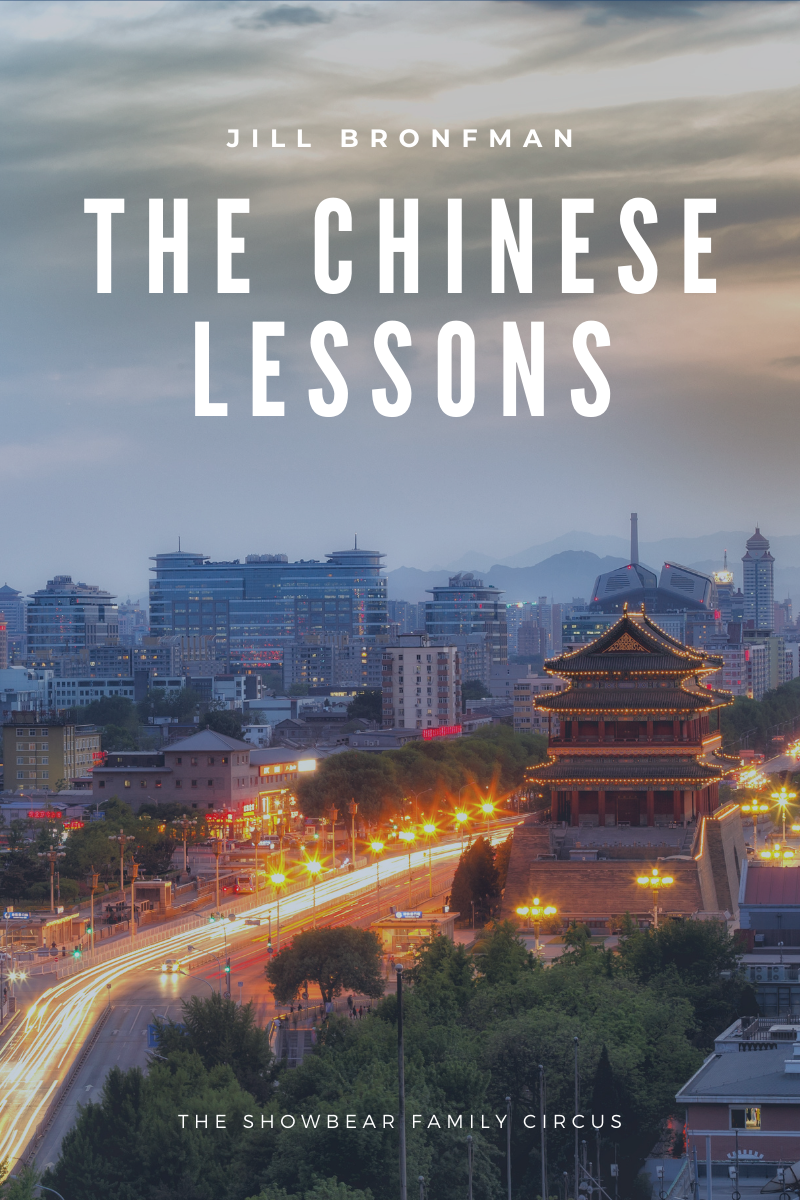
People told me that my daughter was fluent in Chinese, but before we went to Beijing together I used to have to take their word for it. She had been in a Mandarin immersion program since she was three years old, but since I didn’t speak Mandarin myself, I had to be satisfied with the occasional school speech or compliment from a fellow parent who did speak the language. The opportunity to test this abstract theory of bilingualism in the field presented itself in May when I was asked to speak about the development of artificial intelligence in educational technology in Beijing. I decided to bring my daughter with me as travel companion, translator, and wing woman.
The last time I went to Beijing, I was the same age as my daughter was on this trip, but so much had changed for sixteen-year-old girls, and so much had changed in China. I thought I was worldly, but my world was small. Today, China is a vivid juxtaposition of impenetrable technology and touchable antiquity. Today, a teenager is full of WeChat and snarky memes that she has to explain to me.
As we arrived in Beijing, my daughter repeated the warnings her Chinese teachers had given her before her exchange program three years ago. Don’t mention the three Ts: Tiananmen, Taiwan, and Tibet. The warnings were not just not to discuss the politics surrounding these places, but literally, do not say these words. From my previous visits, I added the mental note not to mention the Cultural Revolution, which people sometimes talk about today, but only in the vaguest terms, like those were difficult times. I noticed that the Lonely Planet Guide books on China were the only Lonely Planet Guide books not available in China. I’m going to say that the history section in the guide book did not cohere with the official government description of history.
The flood of Chinese language began in earnest as we traversed the enormous city. My daughter negotiated for a taxi for 34 Yuan or about $2 to the Temple of Heaven across town and bought the tickets for another 34 Yuan for both of us to enter the Temple of Heaven park. She chatted with Jennie, the Hu Tong tour guide, about how the Hu Tongs had changed over the last few years to greet tourists. She deciphered the tasting menu at King Joy Vegetarian Restaurant through all twelve courses and found The Noodle Bar out of hundreds of restaurants in the China World Mall. When she made the driver who only spoke Chinese laugh, I learned that my child is funny in two languages. Watching her interact with adults in another country was a glimpse into the future, not just in the sense that Chinese is becoming the world’s language, but into my own personal future in which she will be the parent and I will be the child.
I reminded myself that whatever has happened since, the two biggest tourist attractions in Beijing sport a mountain-size portrait of Mao and what remains of Mao himself, respectively. When Jimmie, our tour guide for the Forbidden City, spilled the tea on the power grabs and poisonings of the Chinese royal family, we did not ask him if he had similar dark side stories about Mao and subsequent government officials. And I’m pretty sure that the low-lying clouds the pilot said were hanging over our entry to Beijing were pillows of smog in the 300 AQI range. These were especially important discussions—the discussions about what not to discuss—as we intended to meet up with my daughter’s exchange family in Beijing and have dinner with them.
The only time Rose and her family could meet us was for dinner on Saturday. Rose’s every moment was scheduled with academic preparation, additional academic preparation, and preparation for that. They call them cram classes because they are cramming for exams, but they are also crammed into every waking moment of the children’s days. There’s no such thing as free time for teenagers in China who want to go to college, especially if they aspire to go to school in the United States as Rose does. So much of Rose’s daily life was stacked into Confucian ideals of family dinners and studying for exams.
Before the exchange reunion dinner, I began to see what people meant when they said my daughter spoke Chinese like a Chinese person. It really does help to start learning a second language when you aren’t even sure yet what language is and how it relates to your own identity. Certainly, it was humorous when my blue-eyed, curly-haired preschooler told people she was Chinese, but more significantly, the language and culture she was taught at that age became part of who she was and still is.
When we got to the Blossom Restaurant, I greeted the predictably polite parents of my daughter’s exchange buddy and accepted their shockingly expensive gift. They gave us a large round of Pu’er tea pressed into a cake and enclosed in an engraved wooden gift box. We had sadly brought nothing as a gift, and didn’t even get to pay for dinner because we couldn’t figure out the iPad ordering system or pay using WeChat. Instead, I offered our hosts the only thing I could offer, and perhaps the only thing they might value. I said, Please send us Rose. Please send us your daughter and we will drive her around to visit American colleges and we will help her find a place in California to study and to grow. Looking at my own daughter, I wondered if she would like to go to China for school. Could I bear to send her to another country for her own good, or for the good of the entire world? I’d like to imagine that I could. I’d like to imagine that the world belongs to these girls, who giggled over their WeChat posts while their parents postured over paying the bill.


Comment early, comment often, keep it civil: