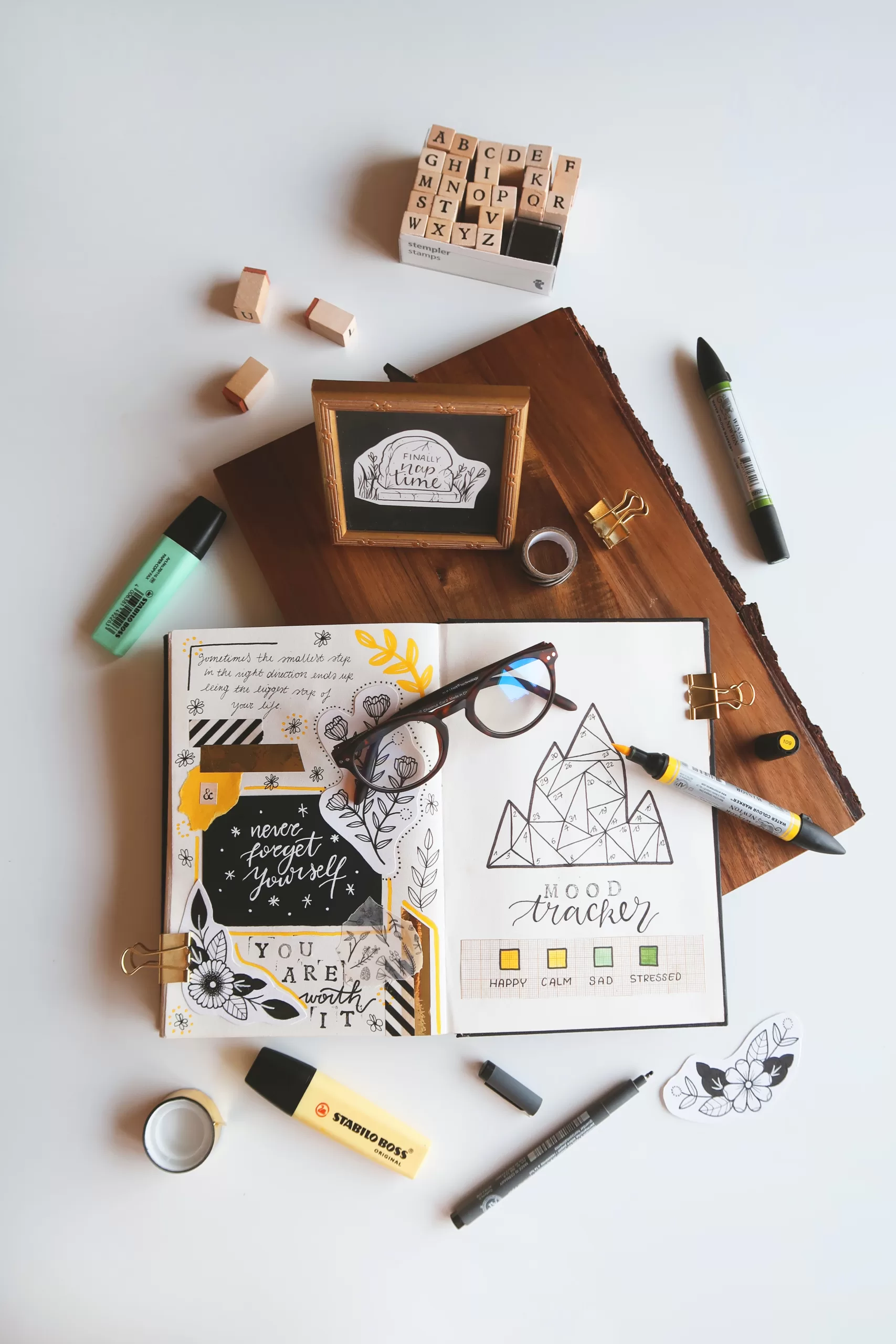
You’re more creative than me. You are. Or — at very least — equally creative. That belief motivates and empowers my own creativity: you, reading this right now, are more creative than me, Lancelot Schaubert. If you don’t believe that, you aren’t thinking clearly. It’s okay to not be thinking clearly — muddleheadedness affects me all the time and there’s no shame in it, it’s just the beginning of wonder — but I’m telling you right now: you’re more creative than me.
In fact, one of the phrases that angers me more than… probably more than it should… probably more than 90% of the things I hear repeated in my general vicinity often enough is this declarative statement, “Lance: I’m not as creative than you” or “I’ll never be that creative.” I hear it so often it’s highly likely someone reading this thinks I’m responding to their having said something similar in the last few weeks or months. I’m not — it’s almost white noise at this point, that I’m more creative than X. Or than “me.” Or whatever. I hear it daily, weekly, monthly.
It’s a lie.
Already, you are more creative than me, or just as creative. You’ve just been blinded to it by modern cynical society.
I operate under a few assumptions. Here’s one: you didn’t bring yourself into being, neither did a mountain, neither did the aquifer you’ve used most of your life as your water source, neither did superstrings vibrating in the tenth dimension or lasers in bubbles. You didn’t make you. You’re contingent, moment to moment. And so is everything physical. I’m saying you’re a created thing and, being a rational soul with consciousness, you’re both self-reflective and try to put yourself out into the world. Sometimes you do this through personification of clouds on a summer day or tree knots at all hallow’s eve.
Sometimes you do this by thinking a thing and making it real in the actual world. And the more important the thought, the more important the made thing. And some made things are so important, they generate newer and better thoughts. “Made thing” in Latin is “art.”
“Knowledge” in Latin is “science.”
Therefore, science manifest is art. And an art that leads to new science would be considered “fine.” That is to say there’s a difference between painting a ceiling and painting the ceiling of the Sistine Chapel. There’s a difference between canvasing a boat hull and canvassing Manhattan with wheat paste prophetic street art. There’s a difference between nondescript grey goo towers and the Guggenheim.
You make in the image in which you’re made.
You think new things.
And you make those things real.
And sometimes those things you make encourage others to make as well.
It’s a disposition, really, rather than an innate talent of one person over another. A practice. An artistic practice, some might say. I’ll go so far as to call it a spiritual discipline, creativity.
Perhaps the spiritual discipline: the theology of play, the intersection of work and rest on Good Friday.
Criticism is fundamentally a destructive act. Destruction is helpful insofar as it encourages future creativity: yes, sometimes a forest needs a fire to properly fallow. But it’s seeded from its past self and from other forests. What if you burn down the forest of all forests? Or, in the American lumber and homebuilding case, simply chop it down and turn it into studs for framing?
Wouldn’t both greenery and oxygen and, ultimately, the atmosphere itself be destroyed?
That’s the life of criticism: the life of destruction and consumption first.
And so the greater urge is already in you: to create and not to destroy, to iterate and not to kern, to generate and not to freeze or obstruct or blame or requisite or demand. Make and fail and make and fail and make and fail and make.
People sometimes mean I’m more bountiful in it, but that has nothing to do with creativity. It has to do with conviction: I truly believe the bounty of childhood must be carried into adulthood. I think the philosophy (and theology) of play is all of philosophy (and theology): wonder, creativity, iteration, hope, joy, grace, an awakening to the power of recovered innocence in the teeth of cynicism.
The most vile people I know, both inside and outside of religious circles, are also the most cynical.
Those healing?
Those on the road to recovery?
They’re insistent on practicing their inherent creativity. Putting themselves out there. Facing the dragon. A study came out recently that career artists live longer, are happier, are more financially secure (you’d almost have to be more financially secure to have lived off your art your whole life), etc.
Folks I know who cynically criticize art?
They’re still at their best when they’re artfully arranging stones.
Or writing down their thoughts (everyone’s a writer, more or less, it’s one of the few non-survival things we all must do, it and some amount of singing, some study, some thinking up new thoughts).
Or secretly painting in their drawing room.
Or quilting brilliant patterns out of salvaged jeans. Or genes.
Or doing chalk art with their grandkids. Or chalk art with their pet barlgura.
The difference is whether or not you’re still believing the lie that it’s only of value if you’re copying Pinterest. Copying what the art is at the front of the room. How well you copy, trace, imitate. That’s fine at the start, of course, it’s a way of learning something specific. But it’s also the wrong way to teach art: here everyone paint this picture of Starry Night. The kid who does it best? That’s the artist and everyone else is in finance.
No no.
Does someone who can perfectly render an analysis of the durable competitive advantage of a historically undervalued stock (judging by the p/e, p/b, PEG ratios) suddenly force the entire class to not do a basic budget and file their taxes?
Sounds like an easy way to get audited.
Same goes for art. Consider this an audit. I’m auditing your life: how long has it been since you iterated? Yourself? Not merely imitated someone else? Or whatever’s popular or whatever junk Pier 1 or Bed Bath and Beyond (are they still around) is selling?
Imitation precedes creation only inso far as it teaches us form, method, principles.
Creativity, rather, is trying something whole cloth.
You can’t really be an original.
But you can be yourself. You can play.
All the towering materialism which dominates the modern mind rests ultimately upon one assumption; a false assumption. It is supposed that if a thing goes on repeating itself it is probably dead; a piece of clockwork. People feel that if the universe was personal it would vary; if the sun were alive it would dance.
— GK Chesterton, Orthodoxy
This is a fallacy even in relation to known fact. For the variation in human affairs is generally brought into them, not by life, but by death; by the dying down or breaking off of their strength or desire. A man varies his movements because of some slight element of failure or fatigue. He gets into an omnibus because he is tired of walking; or he walks because he is tired of sitting still. But if his life and joy were so gigantic that he never tired of going to Islington, he might go to Islington as regularly as the Thames goes to Sheerness.
The very speed and ecstasy of his life would have the stillness of death. The sun rises every morning. I do not rise every morning; but the variation is due not to my activity, but to my inaction.
Now, to put the matter in a popular phrase, it might be true that the sun rises regularly because he never gets tired of rising. His routine might be due, not to a lifelessness, but to a rush of life.
The thing I mean can be seen, for instance, in children, when they find some game or joke that they specially enjoy.
A child kicks his legs rhythmically through excess, not absence, of life. Because children have abounding vitality, because they are in spirit fierce and free, therefore they want things repeated and unchanged. They always say, “Do it again”; and the grown-up person does it again until he is nearly dead. For grown-up people are not strong enough to exult in monotony.
But perhaps God is strong enough to exult in monotony. It is possible that God says every morning, “Do it again” to the sun; and every evening, “Do it again” to the moon.
It may not be automatic necessity that makes all daisies alike; it may be that God makes every daisy separately, but has never got tired of making them. It may be that He has the eternal appetite of infancy; for we have sinned and grown old, and our Father is younger than we.
The repetition in Nature may not be a mere recurrence; it may be a theatrical ENCORE. Heaven may ENCORE the bird who laid an egg. If the human being conceives and brings forth a human child instead of bringing forth a fish, or a bat, or a griffin, the reason may not be that we are fixed in an animal fate without life or purpose.
It may be that our little tragedy has touched the gods, that they admire it from their starry galleries, and that at the end of every human drama man is called again and again before the curtain. Repetition may go on for millions of years, by mere choice, and at any instant it may stop. Man may stand on the earth generation after generation, and yet each birth be his positively last appearance.
Open a word document, a blank canvas, a silent hall.
Think.
And then make something. And fail at what you had in mind. And then make again. And fail again.
Make.
Fail.
Make.
Fail.
Make.
Fail.
MAKE.
You’ll find you’re more creative than me, inherently.
Do it long enough, you might also find yourself full of joy and hope. It’s because you’re in sync with your origin. With the one thing that made you happy as a child in everything:
The magic of being.
You might not have been.
Same thing with that line on that blank canvas, the first brustroke:
Morality, like art, consists in drawing the line somewhere.
— GK Chesterton
PS — If you want to try a short story version of the same messages in this piece, go over to Clarkesworld and check out Better Living Through Algorithms by Naomi Kritzer.
Cover Photo by Estée Janssens on Unsplash


Comment early, comment often, keep it civil: