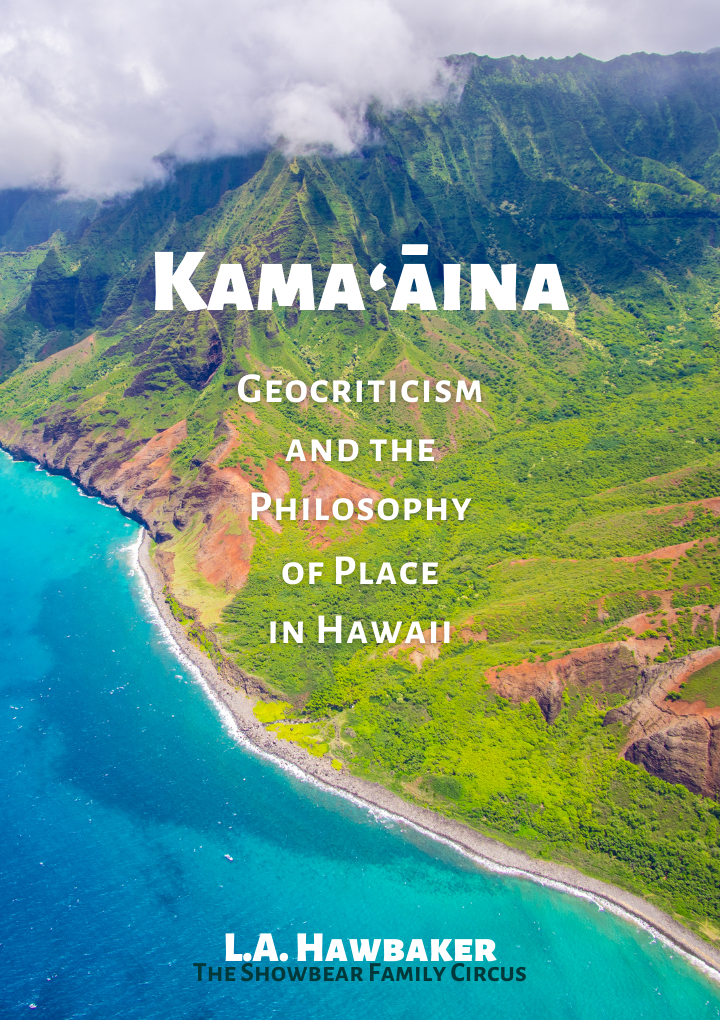
Geocriticism and the Philosophy of Place in Hawaii
He ali`i ka aina, ha kauwa ke kanaka.
(The land is a chief; man is its servant.)
The Scolopendra is an armored, 30-legged centipede that curls beneath stream rocks and coconuts. These centipedes are like something out of a horror movie. They are eight inches long and have pointed red limbs like teeth. They are poisonous. They bite. They’re too long and too hard to be squashed. They can only be killed with a kitchen knife.
A Scolopendra isn’t the first image to come to mind when one thinks of Hawaii. Yet the Scolopendra is, in some ways, a perfect totem for the islands. It is a series of segments lined up into a single selfhood, just as the 130+ separate islands and atolls form the long line of the Hawaiian archipelago. Like Hawaii, it is a survivor. It is exotic, beautiful in its complexity, protective of its home, dangerous when it needs to be—let’s not forget the infamous death of Captain James Cook in Kealakekua Bay. Like Hawaii, the Scolopendra is very, very misunderstood by the outside world.
The Hawaiian archipelago is the most isolated place on Earth—located over 2,300 miles from the next nearest landmass, California, and 4,000 miles from the nearest after that, Japan. Yet it is also one of the most popular vacation destinations in the world. Its history is one of rich indigenous culture, yet also of travelers who’ve come to its shores through colonization and imperialism.
Island life is dictated by its land. The greatest, most powerful Hawaiian goddess is Pele, the avatar of volcano and fire, the creator of all life, the giver and taker of land. In 2014, a lava flow nearly destroyed the town of Pahoa. The slow-moving disaster made international headlines, with CNN, Fox News, and the BBC descending on the Big Island with cameras and microphones in hand, ready to capture horrific images of a town in turmoil.
…
To unlock the rest of this article, click *HERE* to join the Circus!


Comment early, comment often, keep it civil: