My good friend Krista regularly makes book recommendations to me and buys books for me, and I have loved every single one. That is remarkable to me. I don’t have that kind of success rate when buying gifts for my own husband and son. When I think about Krista selecting books for me, I am aware that the nature of selecting a book for someone feels intimate—almost like picking out a perfume for someone else. (A terrifying prospect that I have not attempted since I was in gradeschool and bought my mother drugstore perfume.) A book can connect with us in deep places, and the person making the recommendation has to have a sense of how those words will hit those places, which means the person has to know us first. That kind of knowing is a beautiful thing. Instead of feeling exposed, this kind of knowing feels like love and attention that you can bask in.
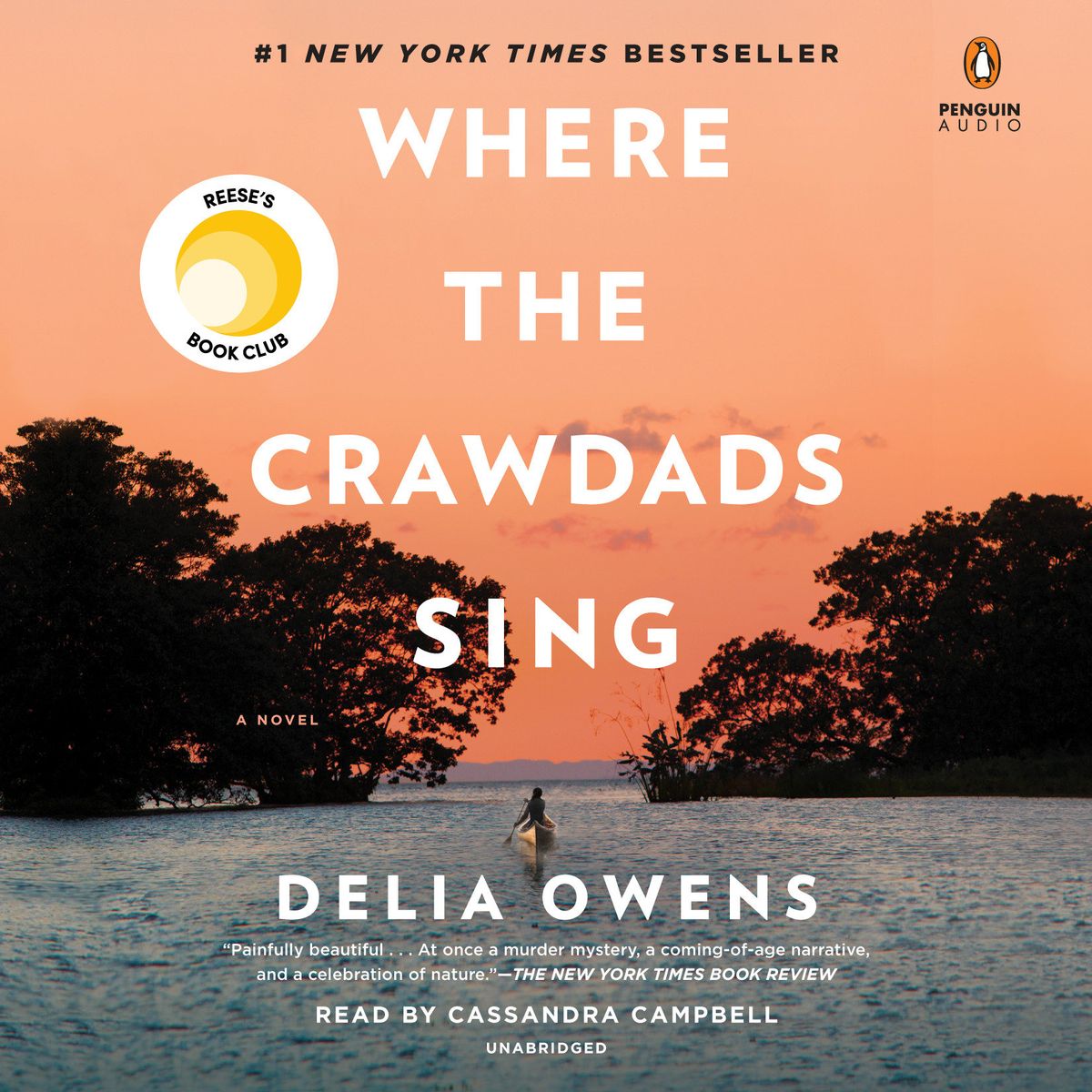
This idea of knowing and being known figures in prominently to the story line of Where the Crawdads Sing, Delia Owen’s first novel. This is a novel about growing up, and it is a murder mystery at the same time, so we journey with Kya Clark from childhood to womanhood and through an investigation that has named her as a prime suspect. (No plot spoilers here. I will steer clear of details that give away the ending.) Kya’s childhood forces her to grow up quickly. Her mother walks out on the family, and her older siblings soon leave too because none of them want to deal any longer with the drunken rages of their father. Six-year-old Kya stubbornly stays put, waiting for her mother to return home one day, even if it means ducking out of the house to avoid her father’s black moods. The marshlands of coastal North Carolina become her refuge, and Kya learns how to take care of herself and she learns to intently observe the land and all its signs of life because the life there is the closest thing she has to companions.
Until adolescence, Kya’s existence is defined by her hunger—physical, emotional, and relational. Her skills to navigate the marsh grow, but she longs for the mother who left and for the kind of human connection that she observes on her occasional trips to town for meager supplies. As she grows, she begins to make connections; a compassionate older black man named Jumpin’, his wife Mabel, and a boy from town named Tate. These tenuous, web-like strands form the basis for Kya’s relational experiences, and they are the closest thing to family and friendship she experiences as she approaches adolescence.
Owens doesn’t whitewash the difficulties Kya experiences alone on the marsh; this isn’t a fairy tale. And just like any coming-of-age story, Kya has her fair share of heartache, loss, disappointment, and frustration, all without the benefit of a loving, safe home. Some of these losses create deep wounds in Kya, and she begins to believe that she doesn’t need people, that people cannot be trusted. She rehearses this litany to herself, “’You said you loved me, but there is no such thing. There is no one on Earth you can count on.’”
Fast-forward to her early twenties, and we learn that there has been a murder out on the marsh, and as the local deputies investigate the crime, Kya becomes a suspect. Owens dances back and forth between the time leading up to the crime and the days after, showing us the turmoil in the marshland community caused by this violent murder.
I chewed on the ending for several days, tracing and re-tracing it the way my thumb will worry a rough spot on an otherwise smooth fingernail. Sometimes a book ending will bug me because I don’t like it. Let’s be honest, sometimes we get attached to characters and we begin to mentally construct their trajectory even while the author heads in the opposite direction. As a reader, frustration is inevitable in cases like this. Other times, I get annoyed by an ending because it falls flat, almost like the author ran out of steam and just stopped writing. But this time, when I closed the book, I think what bugged me was a deep sadness for Kya because she was never really known. At least, not like we all long to be known. Early in the novel, the boy Tate leaves her feathers for her collection. He seems to know how much Kya loves the birds and how she wants to document that love by gathering tokens from the wildlife that is prolific in the marsh. And those gifts are one way of knowing and loving her.
* * *
For a long time, I appreciated the sentiment that someone can love another person in spite of that person’s flaws. It seemed magnanimous to me, that someone could be large-hearted enough to take in another person into his life despite the stupid and destructive tendencies we all have. But the last few years, this sentiment has started to bug me. It feels like it indicates condescension on the part of the one extending love. As if that person doing the loving doesn’t have any flaws, but he has deigned to love a poor fool riddled with foibles. According to a well-known passage from the Bible about love that often shows up during wedding ceremonies, love should not boast or be proud, and yet the idea of loving someone in spite of their flaws seems to originate from a prideful, superior position. It doesn’t feel like love; it feels like pity.
Love between humans must start with the understanding that both parties are flawed; it can then continue if both parties are committed to extend lovingkindness that keeps no record of wrongs. This is not a doormat kind of love or a love that is content to err over and over again. Instead, it is a love that knows the beautiful, complicated, and messy depths of another person, yet still reaches out to say, “I love you. Period.” It is a love that’s not going anywhere, that can’t be scared off by imperfections or grievous wrongs.
* * *
When the novel ended, I wasn’t sure if Kya ever experienced that kind of knowing that comes from a deep and freeing love. If there is exposure connected to this kind of knowing, it doesn’t bring shame. Instead, it brings garments to cover up, to protect, to heal. It seemed like no one knew Kya this way, and this wasn’t completely due to negligence on the part of those in Kya’s life. Kya herself set the boundaries out of a sense of self-preservation, maybe not even realizing that those boundaries that protected her also kept people out.
It’s possible that this theme of knowing and loving wasn’t Owens’ primary intention, but I am grateful for the bittersweet picture in this novel that has been a reminder to me of the risk and reward that is part of knowing and being known, loving and being loved.


Comment early, comment often, keep it civil: