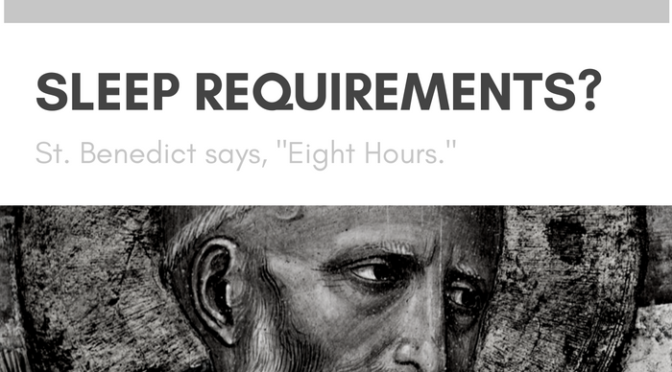
There’s a super funny piece, though, in chapter 8: On the Divine Office During the Night. Remember before you read these sleep requirements by St. Benedict, this passage falls in the context of monks waking up to pray and then falling asleep again :
In winter time, that is from the Calends of November until Easter, the brethren shall rise at what is calculated to be the eighth hour of the night, so that they may sleep somewhat longer than half the night and rise with their rest completed. And the time that remains after the Night Office should be spent in study by those brethren who need a better knowledge of the Psalter or the lessons.
That’s right. 8 hours of sleep was pretty much commanded by St. Benedict, the chief abbot of the Benedictine monks, because he wanted them fully rested for the task at hand — often this included taking care of war-torn refugees and homeless and starving children during national conflicts like the Crusades or The War of The Roses. You know, The War of The Roses — the historical conflict on which Game of Thrones was based. And you thought it was hard for YOU to fulfill sleep requirements like 8 hours of sleep.
Oh and there’s another bit:
From Easter to the aforesaid Calends of November, the hour of rising should be so arranged that the Morning Office, which is to be said at daybreak, will follow the Night Office after a very short interval, during which the brethren may go out for the necessities of nature.
So if you need to wake up to pee, St. Benedict says that’s cool too. Actually, the whole point of saying that is to distinguish between nighttime in the winter (the first quote) and nighttime in the summer. You gotta remember: these guys didn’t have central heating. Encouraging them to stay indoors during the winter nights was as much of a conservation of energy command — even a health command — as it was for restful sleep. Burlap robes are warm, but they’re not solar blankets from NASA.
Anyways it’s nice to know the monks were flexible in their sleep requirements.


Comment early, comment often, keep it civil: