The Intuition of Interconnection
Nature replicates itself. Branching trees mirror tributaries in river networks, which reflect veering veins beneath our skin or forked lightning bolts under humid heat. The golden ratio measures the symmetry of pinecones, seashells, the human face, and hurricanes with the atmospheric force of circular replication. Our eyes, our most vulnerable portals, replicate the black hole, sucking in the light from our irises into the point of no return.
Nature replicates itself because it is efficient and productive. It has replicated itself for millennia before the first Homo sapien strutted straighter than the rest and before our long-gone ancestors agreed to try putting the eggs on the inside of the body. Yet while nature has proven its resilience and adaptability for 4.6 billion years, we are turning heads up following the path towards profit instead of looking sideways towards our fellow organisms.
The lasting lesson of nature and the one doctrine that will surpass our synthetic legacy is the universal and inextricable need for connection. To our detriment, we are failing to follow the harmonious interconnection and dependence that nature preaches and the lessons they lend.
From the microecosystem of insects and fungi collaborating in soil’s creation—the foundation for our observable life—to the precarious balance between predator and prey in the multitude of color, shape, and size that inhabit the great blue, everything has a connection with the greater system. Ecosystems sustain their resilience through timeless exchanges of energy and heed their wisdom of the value of every being in the system. Absorbing the sun’s energy and converting it into oxygen, the sea grass of the deep blue or the grass under the sky blue provide shelter for crustaceans and insects and food for the plankton and bunnies. Fish and foxes feast, while sharks and wolves are next to take their place in the ecosystem. Energy moving up to the highest predator in the ecosystem to return to the system with their final breath. The worms of the sea and land join with other detritivores to recycle the energy once more.
Transcending the visible and into the cosmos, our knowledge is limited but the greater connection between us and the universe remains undisputed. Are we not a member of the nine great planets curving with gravity of the sun? Are we not a part of the Milky Way community where millions of other solar systems spin collectively? And the universe is rife with galactic systems numbering in the millions to cluster around one another in kinship and circularity.
Losing Nature’s Insight
Rife with physical and universal attractions to one another from the greater galaxies to the soil-inhabiting organisms, then why do we separate ourselves from the greater collective? Eclipsing our role as organisms on this planet to designers of its fate, then isolating ourselves first as a species then as an individual. We can only look to interrupted linkages in the natural world to foreshadow our fate from imbalanced interconnection.
Instead of an inter-woven governance web that profits from the diverse roles of energy producers, prey, predators, and detritivores to form Elton John’s ubiquitous circle of life, we operate in hierarchical systems that place predators at the top, and the lowly grass and plankton at the bottom. What we forget is that we rely on their conversion of energy from the sun to sustain the entire system, as we rely on the farmers and the farmworkers to harvest the sun’s energy as sustenance and support. The detritivores who feast on the dead ensure that the world isn’t full of rotting carcasses, like our sanitation workers who remove and manage our own waste. Without these undervalued yet key roles, our society would be food-less and waste-full.
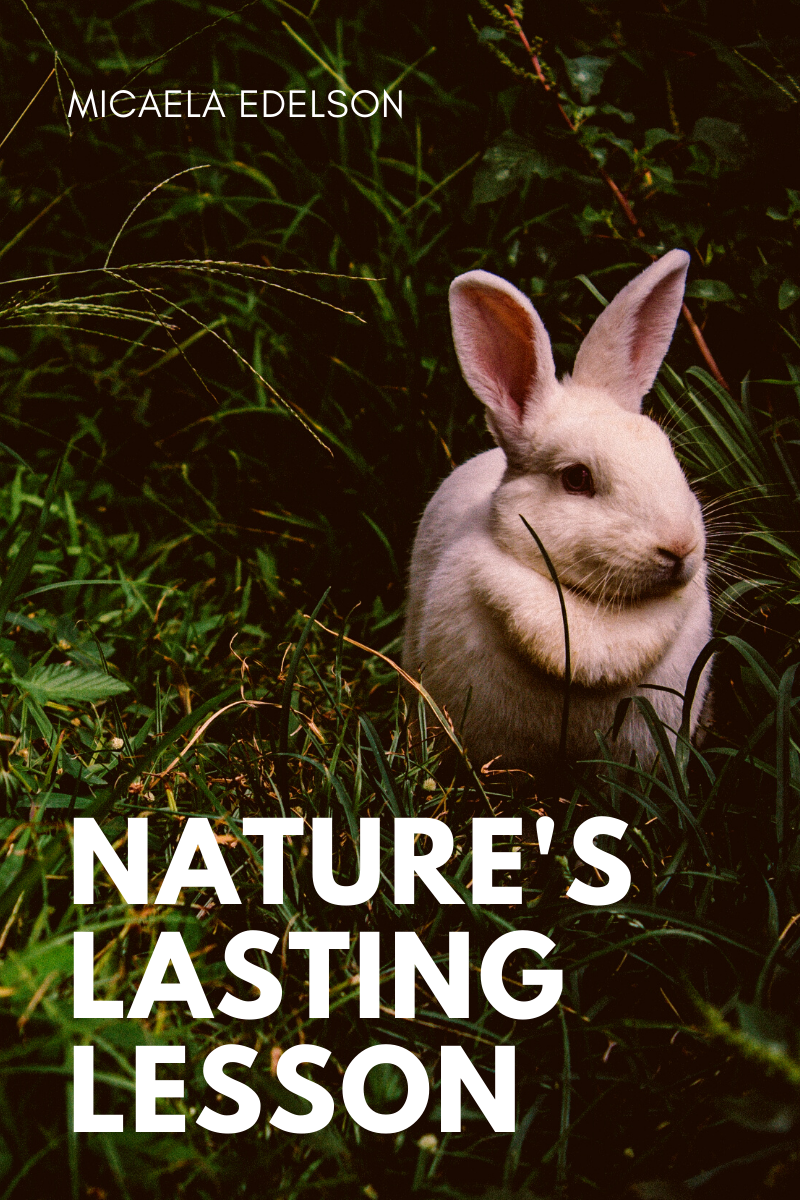
But our predators have forgotten the equivocal balance. They are claiming too many foxes and tipping the scale. The working-class bunnies swell and are quick to compete for the scarcer and sparser grasslands. Wolves working twice as hard to fill their bellies with the smallness of the working bunny over the stabilizing middle-class fox. Has the wolf not the foresight to see how such near-sighted greed can squeeze the stability of the system to the point where prey die quicker from starvation than by predatory attack? In the end, as the wolves’ food source dwindles, only the bunnies will be left to squabble.
As our destabilizing short-term greed can be demonstrated through the tipping of terrestrial ecosystem interaction, so too can human indifference and individualism be replicated through aqueous ecosystems.
When the naturally-filtering oysters are overharvested (by humans) in the Chesapeake Bay, the oxygen-depleting algae prospers in the predator-free environment. The algae shield the sun from the seagrass; and the seagrass, too darkened without light, are too unwilling to breathe life into the ecosystem. The fish, reliant on the breaths bestowed by the seagrasses and a habitat cleaned by the oysters, succumb to the algae’s will and suffocate in their own homes. The seagrass none the wiser, and the oysters, already taken away. The Chesapeake’s ability to regenerate is imperiled. Have we not also known the consequences of life without light, purposefully shielded to maintain the status quo of unabated oxygen depletion? Do we wish to see our future foregone by the extermination of our filterers?
When the balance is gone and when one species, or one class, preaches dominion, the equilibrium begins to deteriorate. Will the wolves ever learn that the ecosystem is balanced in their favor? That the prosperity of all is dependent on the diversity and stabilizing checks of roles and responsibilities. Will the humans ever learn? If it is the will of the human to disrupt the ecosystem through overharvest, shall we not also compare to the antagonist of the Bay who works to suffocate the middle of the food chain through the blinding of energy convertors and the dissemination of unfiltered debris?
As we fail to learn from the balance of nature, we endanger the sustainability of humanity, and our predatory greed recedes down the food chain to threaten the stability of ecosystems of which we are not even members.
We disrupt whole ecosystems entirely through our determined and ignorant target of keystone species—the lynchpin of an ecosystem who hold its structure solitarily. Our hunt for ivory leaves forest floors untrampled by the elephants who shape the landscape and allow smaller beings to propagate. Our increasing anthropogenic carbon emissions absorb into the ocean and acidify the coral who provide refuge for turtles and fish protecting themselves against the predators of the Great Blue. Our deforestation threatens the beavers ability to dam waterways, redirect water flows to control quantity and quality of the flowing water, and pool habitats for fish, birds, and amphibians among others.
These keystone species shape the interactions of the ecosystem and are essential to maintaining the great equilibrium of life, but our need and greed to be the ultimate keystone has already shaped the global ecosystem beyond reparations through the great ivory trade, climate change, and deforestation. We will have to wait to see how our landscapes will operate in the coming decades, and whether our recent renewed environmental righteousness can mitigate the impacts in time.
Like the elephant, beaver, or coral, who are the keystone workers in our society holding the ecosystem together with their roles and responsibilities? Who were marked as “essential workers” when covid hit: medical workers, grocery clerks, truck drivers, the postal service, sanitation workers, farmers—our producers and our detritivores, our landscape shapers and our safety providers. Whose presence in the conference room wasn’t missed: stock brokers, marketing agents, lawyers—our predators, from whom we seek shelter.
Yet who’s contribution to society is deemed more valuable, who is allowed paid sick leave or livable wages? What demographics are disproportionately represented in each of these professions increasing their exposure in a societally- and wage-forced martyrdom that inadvertently makes minorities even more minor? We have lost sight to the value of valuing every being (not just the predators) in the mutual interaction that stabilizes society.
Our Fated Future
Our own social hierarchy has transformed our country from a web of interaction and mutual dependence present in Indigenous cultures of collectivism and equilibrium to one of pecking order and energy leaching, starting from the top piercing downwards. Instead of a web, we have a food chain where people’s ability to rule over others brings them to the top. We devalue our energy convertors, our detritivores, and our middle-ecosystem folks until wolves patrol the barren earth and bunnies starve, until algae proliferate and the seagrass suffocate, until our keystone species are devaluated and departed. Our system is stated to collapse.
Do we not need the soil that bares food nor the sun that radiates energy? Do we not need the comfort and support only a community provides? Why do we have to be created in an image that defies the natural order of universal connection, and why can’t we return to a state of collective equilibrium, both as a species and as Earth dwellers?
Have we not the foresight to see that if we are created in the image of nature, emerging from her tributaries and tree branches to carry oxygen through our veins, that our fate as a species will follow the fate we have set for our planet? For us to witness ecosystem collapse or the impact of a single slain species on the rest, and not realize it is nature’s canary warning of the noxious gas in the coalmine we have created for ourselves, has confirmed our blindness beyond us, our blindness to nature’s lasting lesson of interconnection. We will face Autumn’s final fall soon enough.


Comment early, comment often, keep it civil: