While on family vacation with Kiddo’s side of the family, I figured I could knock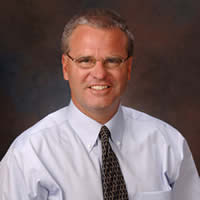 out one of these Ask the Experts interviews. It just so happens that our uncle, Mike Bowers, is fast approaching his second term as the mayor of small town Greenville, Ohio home to Maidrite sandwiches and KitchenAid mixers. In fact, it wasn’t until afterward that I noticed their phone numbers all begin 548, just like Salem, Illinois – my home town. It certainly wasn’t the only parallel.
I sat down shirtless, white dew rag, aviator glasses and a hairy uncle Mike joins me at the baby blue picnic table. There’s a copy of the Dragonrider’s of Pern (my doing) and The Story of Edgar Sawtell (Kiddo’s doing). I arm my recorder and we begin.
Mike Bowers: You have specific questions?
Lancelot Schaubert: Oh yeah, I’ll prompt you.
MB: Did you, uh, run those past my people?
LS: [laughs] How long have you been mayor of Greenville, Ohio?
MB: A little over three and a half years.
LS: A good three and a half, or a bad three and a half?
MB: Good three and a half. It’s always been a good three and a half. We’ve got our challenges, but over all for me it’s been good because I grew up in Greenville and it’s an opportunity for me to give back to the community I grew up in, so I really enjoy the public service piece of the office.
LS: What are some things you’re proud of?
MB: Oh boy. We’re moving some things forward. For a city of that size, the mayor is the chief economic development person. I’m pretty proud of the fact that last year out of five-hundred and some micropolitan areas we were forty-first in the country in economic development projects (that was done by Sight Selector magazine) so that was kinda nice.
LS: Over other cities?
MB: Micropolitans, so anything up to fifty thousand people.
LS: So Joplin might even count in that?
MB: Uhh… unless their population—
LS: After this year?
MB: Well, yeah this year they may be down to fifty thousand… So that award was pretty good. I’m also pretty proud of the different things we’ve done in retaining our businesses, so we’ve had our projects, but we’ve retained pretty much all the folks that we’ve got, keeping out tax base intact.
LS: Mom and Pop shops?
MB: Just everything, manufacturing all the way down. So we’ve been able to maintain the amount of jobs. We’re right now at a net gain from when I took office as opposed to job loss that other communities our size – Greenville’s a population of 13,000 folks – and so I’m pretty proud that we’ve been that successful. We’ve been very fortunate to have the opportunities that we’ve had for growth.
LS: Especially in this climate.
MB: Yeah, in the economic climate that it’s been, everything is… some days are better than others. There’s challenges you face every day, but then with those challenges come opportunities. It’s taking those opportunities and moving forward with them.
LS: “Everything from manufacturing down…” In Greenville that looks like KitchenAid and what else?
MB: KitchenAid’s our largest employer in the city. With all the employees they use, it’s about 900 employees. Then you’ve got Greenville technology who’s a parts manufacturer for Honda. They’re at about 700 folks. You have BASF, our hospital just put a fifty-million dollar addition on to it, so for a community of our size, we’re very fortunate to have a grade-A healthcare facility. It’s continuing to move forward with all those things, different quality-of-life issues that we’re able to offer that not every community our size can.
LS: And when you say grade-A, is that competing with the region?
MB: Region, and nationally recognized for the services they offer. They just opened up a dialysis unit a couple of years ago. Now they’re doing some more and they’re gonna be putting another twenty-million dollar addition onto their dialysis unit. They’re looking at growing, and being a standalone facility for our sized community… we’re very fortunate to have them there. As opposed to having to worry about a regional healthcare facility where we’d have to travel to the Dayton area for certain things.
LS: They have OBGYN?
MB: Yup.
LS: Wow. That is nice for that size of town.
MB: Yup.
LS: What parts of the job get on your nerves? What didn’t you expect? Daily grind stuff…
MB: Probably one of things, fortunately we’ve got a very good working relationship with the State of Ohio – they’ve been very receptive to the projects we’ve got going. We’re probably outside of Montgomery county, the Dayton region – which, for its sheer size, has a lot more going on. They state’s been open to the projects we’ve got. Along with that, it moves at the speed of government. They’re receptive, but it gets frustrating waiting on the time frames that they’ve got, the hoops they’ve gotta jump through, the checks and balances. It’s been frustrating switching places with the government’s office. Things just take a lot more time. When you come from the private sector and you see how things run at the speed of business, when you drop it back down to the speed of government…
LS: [laughs]
MB: …things slow down quite a bit.
LS: I know that’s frustrating for people on a day-to-day level.
MB: Well, Joplin being a bit of an example for that. You know, you have a city, state and federal government involved with a natural disaster there. Fortunately they got a lot of the bugs worked out with Katrina and some of the other natural disasters, they’ve overcome a lot of things. But there’s a lot of paperwork that bogs that process down. I’m sure there’s been frustration from the mayor of your city with the governor’s office even with the whole chain of command up through FEMA. When government works well, it’s fantastic, but it’s easy to criticize and find fault with some of the programs.
LS: Yeah, with micromanagement. I know with the Red Cross, which was a surprise, they had to get everything approved through Washington. Any move they would make, they’d call. Some of the people that read the blog actually think that the most efficient and effective form of government is small, local government. They think we should only invest our time and energy there. Have you seen any of that?
MB: Well, the niceness of local government is that local politics, party-issues are not issues. Everyone’s main concern is the community, the better good of the community and the people. The political lines are not so defined. Thoughts and ideals are not so one-hundred-eighty degrees opposites that are on a state and national level.
LS: Cause at the end of the day, several wrong steps in a row, the whole community goes under.
MB: Yeah, and it is just about the community and the people. And people really do listen to the constituents. I know it’s an easy thing to say at a state and national level that no one listens to the constituents, that they’re making the best decisions for their constituents. I don’t necessarily believe that politicians on that level always listen.
LS: Yeah, I read somewhere recently that the ascent to power becomes more important than the good that you can do when you get there. At some point, that pressure changes to where it’s more important to stay in power than it is to achieve what you went into it for.
MB: Right. The reason you typically go into something like that is for public service. I think they start to loose sight of that when they get eaten up by that political machine. Because on a national level it’s almost the platforms of the parties have made them diametrically opposed to each other just so that they can… they don’t work toward common ground, the greater good of the U.S. and the constituents and the country as a whole. They’re looking more for that balance of power to shift toward their specific party. That’s why you see a lot of earmarks, a lot of pork out there. They’re buying votes for their agenda.
LS: Which is where lobbying comes in.
MB: Which is where lobbying comes into play.
LS: Now have you come into contact with that at all?
MB: None.
LS: [laughs]
MB: Nobody’s there to lobby the local mayor.
LS: ‘Cause on Gilmore Girls, Taylor’s buying up everything for political influence…
MB: Yeah.
(The interview continues in next week’s Ask the Experts).

Now for your viewing entertainment, the Mayor of Cincinati “throwing” a first pitch:
[youtube=”http://www.youtube.com/watch?v=jC1dLxYwWJc”]


Comment early, comment often, keep it civil: